

Learning to drive is one of the most rewarding journeys you’ll ever take. From the nervous excitement of your first lesson to the triumph of passing your driving test, every step brings new skills, new confidence, and new freedom.
But what does that journey actually look like? How many lessons will you need? What should you expect at each stage? And how do you know when you’re ready for the test?
This guide maps out the complete journey – from that very first time behind the wheel to driving away from the test centre with your pass certificate. Whether you’re learning with a driving school in Ilford or have found the cheapest driving instructor near me, this roadmap will help you navigate every stage. And when you’re ready to book, we’ll help you find the best time to book your driving test for faster dates .
Part 1: The First Lesson – Overcoming Nerves
What to Expect
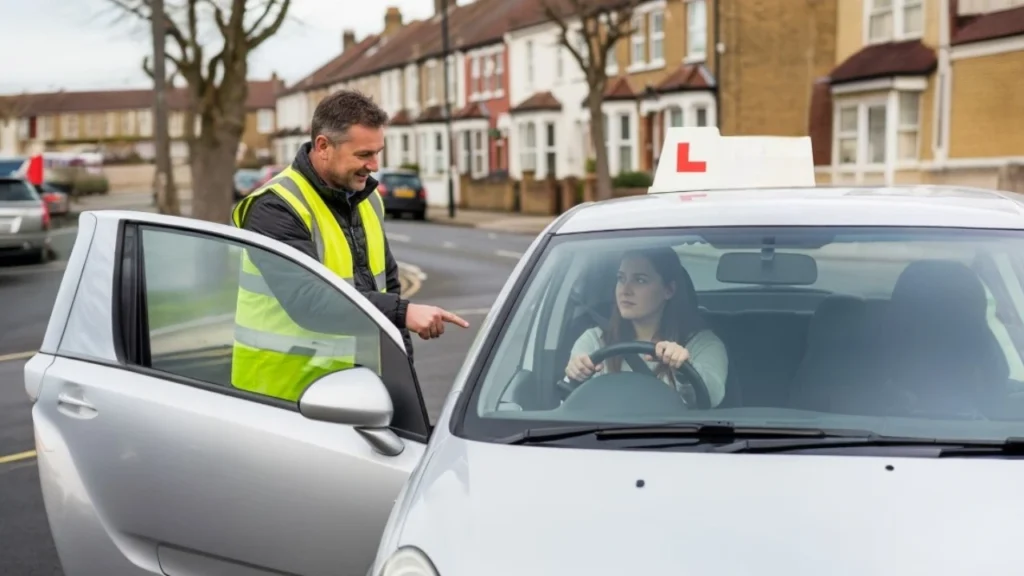
Your first lesson isn’t about driving on busy roads. It’s about getting comfortable with the car.
Typical first lesson structure:
| Time | Activity |
|---|---|
| First 10 mins | Introduction, checking your provisional licence |
| Next 10 mins | The “cockpit drill” – seat, mirrors, steering wheel |
| Next 15 mins | Learning the controls (pedals, gears, handbrake) |
| Next 15 mins | Finding the biting point (clutch control) |
| Last 10 mins | Moving off and stopping – in a quiet area |
Common First Lesson Fears (and Why They’re Normal)
| Fear | Reality |
|---|---|
| “I’ll stall and everyone will laugh” | Stalling happens to everyone. Other drivers have all been there. |
| “The instructor will judge me” | They’ve taught hundreds of nervous beginners. They’re there to help. |
| “I’ll never get this” | Every confident driver started exactly where you are. |
Tips for First Lesson Success
- Tell your instructor you’re nervous – they’ll adjust their approach
- Wear comfortable shoes – thin soles give better pedal feel
- Get a good night’s sleep – tiredness affects concentration
- Eat something light – don’t drive on empty
- Bring your provisional licence – you can’t drive without it
Part 2: The Learning Journey – What to Expect Week by Week
Weeks 1-2: Building Foundations
Focus: Basic control, moving off, stopping, simple junctions
What you’ll learn:
- Clutch control and finding the biting point
- Moving off and stopping smoothly
- Steering and changing direction
- Basic observations (mirrors, blind spots)
- Turning left and right at simple junctions
Confidence milestone: You can move off without stalling most of the time.
Weeks 3-4: Expanding Your World
Focus: Junctions, roundabouts, busier roads
What you’ll learn:
- Emerging at T-junctions
- Handling mini-roundabouts
- Changing gears smoothly
- Driving on busier roads
- Basic manoeuvres (bay parking, pull up on the right)
Confidence milestone: You’re handling more situations without panic.
Weeks 5-8: Mastering Skills
Focus: Manoeuvres, complex junctions, dual carriageways
What you’ll learn:
- Parallel parking
- Reverse bay parking
- Complex roundabouts (multi-lane)
- Dual carriageways (higher speeds)
- Independent driving practice
Confidence milestone: Manoeuvres feel more natural; you’re thinking ahead.
Weeks 9-12: Test Preparation
Focus: Mock tests, test routes, independent driving
What you’ll learn:
- Full mock tests under exam conditions
- Practice on local test routes
- Independent driving (following sat nav or signs)
- Handling test-day nerves
- Show Me, Tell Me questions
Confidence milestone: You can drive without instructor intervention.
Beyond – Test Day and Passing
Focus: The real test, then building post-test confidence
What happens:
- 40-minute practical test
- Eyesight check, Show Me/Tell Me questions
- Independent driving section
- One manoeuvre
- Result and feedback
After passing: Your full licence, first solo drive, Pass Plus options
Part 3: The Numbers – How Many Lessons Will You Need?
DVSA Guidelines
The Driver and Vehicle Standards Agency (DVSA) estimates that the average learner needs:
- 45 hours of professional driving lessons
- 22 hours of private practice
- Total: 67 hours of practice before test
Factors That Affect Lesson Count
| Factor | Impact |
|---|---|
| Lesson frequency | 2 lessons/week = faster progress |
| Private practice | Can significantly reduce hours needed |
| Natural aptitude | Some pick it up faster than others |
| Instructor quality | Good instruction = efficient learning |
| Test nerves | May need extra practice to build confidence |
Realistic Timelines
| Lesson Frequency | 45 Hours Will Take |
|---|---|
| 1 lesson per week | 45 weeks (10-11 months) |
| 2 lessons per week | 22-23 weeks (5-6 months) |
| Intensive course | 1-2 weeks |
Plus private practice: Adding 22 hours of private practice can significantly reduce the timeline.
Part 4: Private Practice – The Accelerator
Why It Matters
Learners who practice between lessons often progress 50% faster. Private practice:
- Reinforces what you’ve learned
- Builds confidence in a familiar car
- Saves money on professional hours
- Gets you test-ready sooner
The Rules
| Requirement | Details |
|---|---|
| Supervisor age | At least 21 |
| Supervisor licence | Full UK licence for 3+ years |
| L-plates | Must be displayed front and back |
| Insurance | You must be insured to drive |
| Motorways | Not allowed (except with approved instructor) |
How to Make Private Practice Effective
- Practice what you’ve covered in lessons – don’t try new skills unsupervised
- Start in quiet areas (car parks, residential streets)
- Keep sessions short (30-45 minutes)
- Ask your supervisor to be patient and constructive
- Debrief after each session
Part 5: The Theory Test – Your First Major Hurdle
Test Format
| Section | Duration | Questions | Pass Mark |
|---|---|---|---|
| Multiple choice | 57 minutes | 50 questions | 43 correct |
| Hazard perception | ~15 minutes | 14 video clips | 44 out of 75 |
When to Take It
Don’t wait until you’re “ready” – start studying early. Most learners take their theory test after 20-30 hours of lessons, but this varies.
Preparation Tips
- Use the official DVSA app – it has the real question bank
- Study little and often – 30 minutes daily is effective
- Practice hazard perception daily – it’s a skill
- Take mock tests – aim for 47/50 consistently
- Know the 2026 updates – new CPR and defibrillator questions
If You Fail
Don’t panic. Most people don’t pass first time. Use the feedback to focus your study and retake when ready. You can retake as many times as needed.
Part 6: Knowing When You’re Test-Ready
The 5 Signs You’re Ready
According to the DVSA, you’re ready for your driving test when:
- You don’t need prompts from your instructor – you drive independently
- You don’t make serious or dangerous mistakes – consistent safe driving
- You can pass mock tests – consistently meeting test standard
- You’ve practised managing your nerves – you stay calm under pressure
- Your instructor agrees you’re ready – trust their professional judgement
Mock Tests – Your Best Preparation Tool
Take at least 3-5 mock tests before your real test. They:
- Reveal your weak areas
- Familiarise you with test conditions
- Build confidence
- Reduce test-day anxiety
Common Test-Ready Mistakes
| Mistake | Why It’s Wrong |
|---|---|
| Booking because your friend passed | Everyone learns at different speeds |
| Rushing to meet a deadline | Pressure leads to mistakes |
| Ignoring mock test failures | Feedback is valuable – use it |
| Instructor says not ready | They’re experts – listen to them |
Part 7: Test Day – What to Expect
Before the Test
The night before:
- Check your provisional licence
- Lay out comfortable clothes
- Set TWO alarms
- Get a good night’s sleep
The morning of:
- Eat a light breakfast
- Arrive 10-15 minutes early
- Use the loo (nerves affect everyone!)
- Breathe
During the Test
| Section | What Happens |
|---|---|
| Eyesight check | Read number plate from 20 metres |
| Show Me, Tell Me | Vehicle safety questions |
| General driving | Following examiner directions |
| Independent driving | 20 minutes with sat nav or signs |
| Manoeuvre | One reversing exercise |
| Result | Pass or learn for next time |
Test Day Strategies
- Exaggerate your observations – make mirror checks obvious
- Don’t dwell on mistakes – focus on the rest of the drive
- Talk to yourself – verbalising helps focus
- Breathe – use 4-7-8 technique if anxious
- Remember – going off route isn’t a fault
If You Pass – Congratulations! 🎉
- You’ll receive a pass certificate
- You can drive immediately (once insured)
- Your full licence arrives within 3 weeks
If You Don’t Pass – It’s Not the End
- Most people don’t pass first time (48.5% pass rate)
- You’ll receive clear feedback on what to improve
- You can retake after 10 working days
- Every attempt makes you a better driver
Part 8: Best Time to Book Your Driving Test
Current Waiting Times
The national average waiting time for a driving test is 21.9 weeks (over 5 months) in some areas. Plan ahead.
Tips for Faster Dates
| Strategy | How It Works |
|---|---|
| Book early | As soon as you’re progressing well, book a test |
| Check for cancellations | Early mornings (6-8am) often have new slots |
| Use cancellation apps | Some apps automatically find earlier dates |
| Be flexible | Different test centres may have shorter waits |
| Check Monday mornings | New slots are often released |
2026 Booking Changes (Spring 2026)
- Only learner drivers will be able to book their own tests
- Instructors blocked from booking on your behalf
- Maximum of 2 changes per booking (reduced from 6)
Make sure you know how to book and manage your own test slot.
Part 9: The Journey After Passing
Your First Solo Drive
The first drive without an instructor is a milestone. Tips:
- Start with familiar roads
- Keep the journey short
- Avoid peak traffic times
- Tell someone your route
Building Experience
| Experience | When to Try |
|---|---|
| Night driving | After 1-2 months |
| Motorways | After Pass Plus or with experienced driver |
| Bad weather | Gradually, when conditions allow |
| Long journeys | After 3-6 months |
Pass Plus
Consider the Pass Plus course – 6 hours covering motorways, night driving, all-weather, and rural roads. Benefits include:
- Builds confidence
- May reduce insurance premiums
- Learn skills not covered in standard lessons
Part 10: Frequently Asked Questions
Q: How long does it take to learn to drive?
A: The DVSA average is 45 hours of lessons plus 22 hours private practice. At 2 lessons per week, that’s 5-6 months.
Q: Can I take my test without lessons?
A: Yes, but not recommended. Professional instruction ensures you meet test standards.
Q: What’s the pass rate for first-time test takers?
A: Around 48.5% of learners pass first time.
Q: How soon can I retake if I fail?
A: You must wait 10 working days before retaking.
Q: Do I need to take Pass Plus?
A: Not required, but highly recommended for building confidence in motorways, night driving, and bad weather.
Q: How do I know if my instructor is good?
A: You progress steadily, feel comfortable asking questions, and your instructor gives clear feedback.
Conclusion: Your Journey Starts Here
From that nervous first lesson to the triumphant moment you pass your driving test, the journey is challenging but incredibly rewarding. Every confident driver on the road started exactly where you are – nervous, uncertain, but determined.
Remember:
- Progress takes time – don’t compare yourself to others
- Mistakes are learning – every stall, every wrong turn teaches you something
- Quality instruction matters – a good instructor makes all the difference
- You can do this – millions have made this journey before you
Ready to start your journey from first lesson to test success?
📞 Call Driving Academy Ltd at 07399 696344 – Our patient, experienced instructors in Ilford and London will guide you every step of the way.
📧 Email: drivingacademyltd@gmail.com
📍 Visit Us: 101 Whitechapel High Street, London, E1 7RA
Your driving journey starts here. Book your first lesson today.