


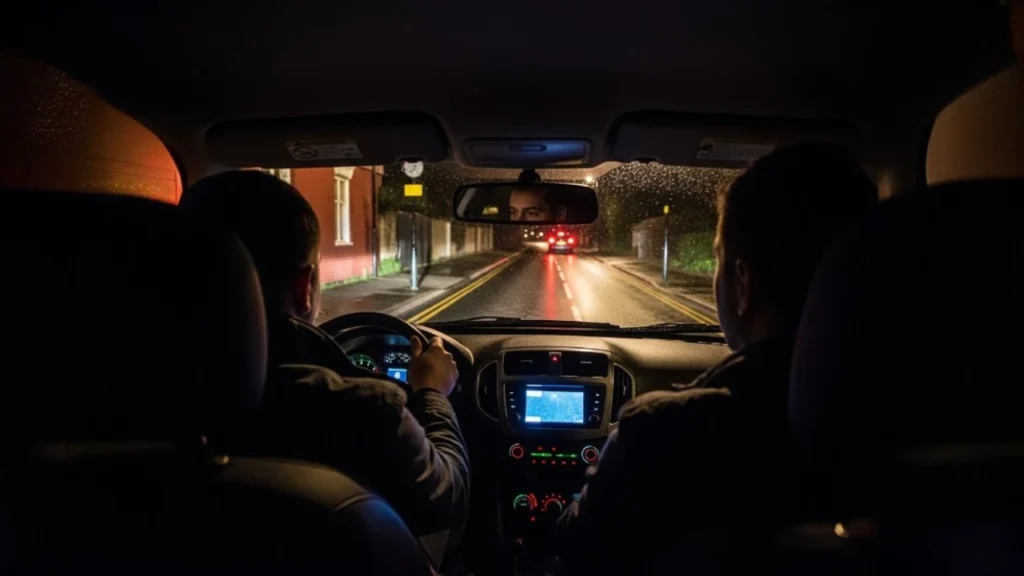
For many new drivers, night driving is intimidating. Reduced visibility, glare from oncoming headlights, and increased fatigue make it significantly more challenging than daytime driving. Yet night driving is inevitable – whether you’re commuting home from work, picking up friends, or driving during the darker winter months.
The good news? With the right knowledge and techniques, you can become a confident, safe night driver. This guide provides essential safe driving tips for night time beginners – from vehicle preparation to handling glare and managing fatigue. Whether you’re learning with a driving school in Ilford or have found the cheapest driving instructor near me, these tips will keep you safe. And once you’ve mastered night driving, you’ll be ready to tackle other challenges like how to master hill starts easily .
Part 1: Why Night Driving Is Different (And More Dangerous)
The Statistics
Night driving is statistically more dangerous than daytime driving:
- Traffic deaths are three times higher at night than during the day
- Reduced visibility is a factor in most night-time collisions
- Fatigue affects reaction times significantly
Key Differences
| Factor | Daytime | Night-time |
|---|---|---|
| Visibility | Clear for hundreds of metres | Limited to headlight range (50-100 metres) |
| Peripheral vision | Full awareness | Significantly reduced |
| Colour recognition | Easy | Difficult |
| Depth perception | Good | Impaired |
| Other drivers | Mostly alert | Possible fatigue or alcohol impairment |
| Animals | Visible from distance | Suddenly appear in headlights |
Part 2: Prepare Your Vehicle for Night Driving
Before you drive at night, ensure your vehicle is ready.
Lights Check
| Light | What to Check |
|---|---|
| Headlights | Both working, clean, correctly aimed |
| Dipped beam | Working, not dazzling others |
| Full beam | Working – use when no oncoming traffic |
| Rear lights | Working – so others can see you |
| Brake lights | Working – test with reflection or helper |
| Indicators | Working and visible |
| Fog lights | Know how to switch them on/off |
Clean Your Lights
Dirty headlights can reduce illumination by up to 50% . Clean them regularly, especially in winter when roads are covered in salt and grime.
Windscreen and Wipers
- Clean windscreen inside and out (smears cause glare)
- Top up screenwash with winter-grade fluid
- Check wiper blades – replace if streaking
- Demist before setting off
Interior Lights
Keep interior lights dim while driving – bright cabin lights ruin night vision and create glare on the windscreen.
Part 3: Essential Night Driving Techniques
1. Use Your Lights Correctly
| Situation | What to Use |
|---|---|
| Lit streets (30mph zones) | Dipped headlights |
| Unlit roads | Dipped headlights normally; full beam when no oncoming traffic |
| Approaching another vehicle | Dip to main beam before they reach you |
| Following another vehicle | Use dipped beam – don’t dazzle them |
| Fog | Front and rear fog lights (only when visibility under 100 metres) |
2. The “Dipping” Rule
Always dip your headlights:
- When another vehicle approaches
- When following another vehicle
- On well-lit roads
- When entering built-up areas
Dip early – don’t wait until you’re right in front of the other driver.
3. Slow Down
Your headlights only illuminate 50-100 metres ahead. At 60mph, you travel 27 metres per second – that’s only 2-4 seconds of visibility.
Night speed guideline:
- Drive at a speed where you can stop within the distance you can see
- Reduce speed on unlit roads
- Be extra cautious on bends – your lights don’t bend with the road
4. Increase Following Distance
At night, double your following distance:
| Condition | Following Distance |
|---|---|
| Daytime, dry | 2 seconds |
| Night, dry | 4 seconds |
| Night, wet | 6+ seconds |
5. Look Where You Want to Go
Your natural instinct is to look at oncoming headlights – don’t. Look at the left-hand edge of your lane (the kerb or white line) to avoid being dazzled.
6. Use the “Edge of Road” Technique
If an oncoming driver doesn’t dip their lights:
- Look to the left-hand edge of the road
- Use the white line or kerb as a guide
- Slow down
- Don’t flash your lights aggressively
Part 4: Managing Glare and Visibility
Headlight Glare
Glare from oncoming headlights can temporarily blind you.
How to reduce glare:
- Keep your windscreen clean (inside and out)
- Look to the left edge of the road
- Adjust your rear-view mirror to night mode (flip the tab)
- Slow down until you can see clearly
- If necessary, pull over safely until your vision recovers
The “Night Mode” Mirror
Your rear-view mirror has a small tab underneath. Flip it to reduce glare from vehicles behind you.
Rain at Night
Night + rain = very poor visibility. In these conditions:
- Reduce speed significantly
- Increase following distance to 6+ seconds
- Use dipped headlights (not full beam – it reflects off rain)
- Consider pulling over if visibility is extremely poor
Part 5: Staying Alert – Managing Fatigue
Why Night Driving Makes You Tired
- Your body’s natural sleep cycle (circadian rhythm) makes you sleepy at night
- Reduced visual stimulation can make you drowsy
- Long journeys amplify fatigue
Signs of Fatigue
| Warning Sign | What It Means |
|---|---|
| Yawning repeatedly | You’re getting tired |
| Heavy eyelids | You need a break |
| Drifting in your lane | Concentration is slipping |
| Missing exits or signs | Attention is fading |
| Harsh reactions | Reaction time is slowing |
What to Do If You Feel Tired
- Don’t push through – it’s not worth the risk
- Find a safe place to stop – services on motorway, layby on other roads
- Take a 15-20 minute break – walk around, get fresh air
- Drink a caffeinated drink – coffee or energy drink (takes 20-30 minutes to work)
- Take a short nap (20 minutes maximum) if you can do so safely
- If still tired, don’t drive – find accommodation or call someone
Preventing Fatigue
- Get a good night’s sleep before long journeys
- Plan breaks every 2 hours
- Avoid heavy meals before driving
- Stay hydrated – dehydration increases fatigue
- Keep the cabin cool – warmth makes you sleepy
Part 6: Watching for Hazards at Night
Pedestrians
Pedestrians are much harder to see at night, especially if wearing dark clothing. Watch for:
- People near the kerb (might step out)
- Pedestrians crossing mid-block
- People near parked cars (may emerge)
- Drunk pedestrians (unpredictable) – especially late at night near pubs/clubs
Cyclists
Cyclists at night should have lights, but not all do. Watch for:
- Small flashing lights (can be hard to see)
- Cyclists without lights (dangerous)
- Cyclists wearing dark clothing (nearly invisible)
Animals
Animals are most active at dawn and dusk:
- Deer – can suddenly leap into the road
- Badgers – low to ground, hard to see
- Foxes – unpredictable
- Horses – watch for reflective gear on riders
Parked Cars
Watch for:
- Doors opening
- People emerging from between cars
- Vehicles pulling out without signalling
Part 7: Building Night Driving Experience
The Gradual Approach
Don’t start with a long night journey. Build up slowly:
| Step | What to Practice |
|---|---|
| 1 | Drive on familiar roads at dusk |
| 2 | Drive on familiar roads after dark |
| 3 | Drive on slightly busier roads at night |
| 4 | Drive on unfamiliar but well-lit roads |
| 5 | Drive on unlit rural roads |
| 6 | Drive on motorways at night |
| 7 | Drive in rain at night (when confident) |
First Night Drive Tips
- Start with a route you know well
- Choose a time when traffic is light (avoid Friday/Saturday nights)
- Take an experienced passenger if possible
- Keep the journey short (15-20 minutes)
- Practice during winter when it gets dark early
Pass Plus Night Module
The Pass Plus course includes a night driving module. It’s an excellent way to build confidence with a professional instructor. Many insurers also offer discounts for Pass Plus completion.
Part 8: Night Driving and Your Driving Test
Can You Take Your Test at Night?
Yes, driving tests can be taken at any time of day. However, most tests are during daylight hours.
What Examiners Look For at Night
If you take a test at night, examiners assess:
- Correct use of lights
- Appropriate speed for visibility
- Awareness of reduced visibility
- Proper dipping for oncoming traffic
- Safe following distances
Preparing for Night Driving Post-Test
Most new drivers have limited night driving experience. The Pass Plus course is highly recommended to build this skill safely.
Part 9: Emergency Situations at Night
Breakdown at Night
If you break down at night:
- Pull over safely as far left as possible
- Turn on hazard lights immediately
- Use side lights if visibility is poor
- Wear a hi-vis vest if you have one
- Exit from left side away from traffic
- Wait behind a barrier if possible
- Call for assistance – use your mobile
If You’re Dazzled
If an oncoming driver doesn’t dip their lights:
- Look to the left edge of the road
- Slow down
- Don’t flash your lights aggressively
- If you’re temporarily blinded, pull over safely
If You Hit an Animal
- Don’t swerve – you could cause a worse accident
- Brake firmly but stay in your lane
- Pull over safely when possible
- Report the accident to police (especially for larger animals like deer)
Part 10: Quick Reference – Night Driving Checklist
| Before You Drive | During the Drive | If Tired |
|---|---|---|
| ✅ Clean lights | ✅ Use dipped beam normally | ✅ Take a break |
| ✅ Clean windscreen | ✅ Full beam on unlit roads | ✅ Drink caffeine |
| ✅ Check wipers | ✅ Dip for oncoming traffic | ✅ Short nap (20 mins) |
| ✅ Top up screenwash | ✅ Increase following distance | ✅ Don’t push through |
| ✅ Adjust mirrors | ✅ Slow down | ✅ Find accommodation |
| ✅ Set interior lights dim | ✅ Watch for pedestrians/animals | ✅ Call someone |
Conclusion: Confidence Through Preparation
Night driving doesn’t have to be intimidating. With proper preparation, the right techniques, and gradual experience-building, you can become a confident night driver.
The golden rules:
- Prepare your vehicle – clean lights and windscreen
- Slow down – your visibility is reduced
- Increase your following distance – double or triple daytime gaps
- Use your lights correctly – dip for others
- Stay alert – take breaks if tired
- Build experience gradually – start with familiar roads
Ready to master night driving with expert guidance?
📞 Call Driving Academy Ltd at 07399 696344 – Our instructors in Ilford and London can help you build confidence in all conditions, including night driving.
📧 Email: drivingacademyltd@gmail.com
📍 Visit Us: 101 Whitechapel High Street, London, E1 7RA
Your journey to confident night driving starts here. Book your lesson today.