


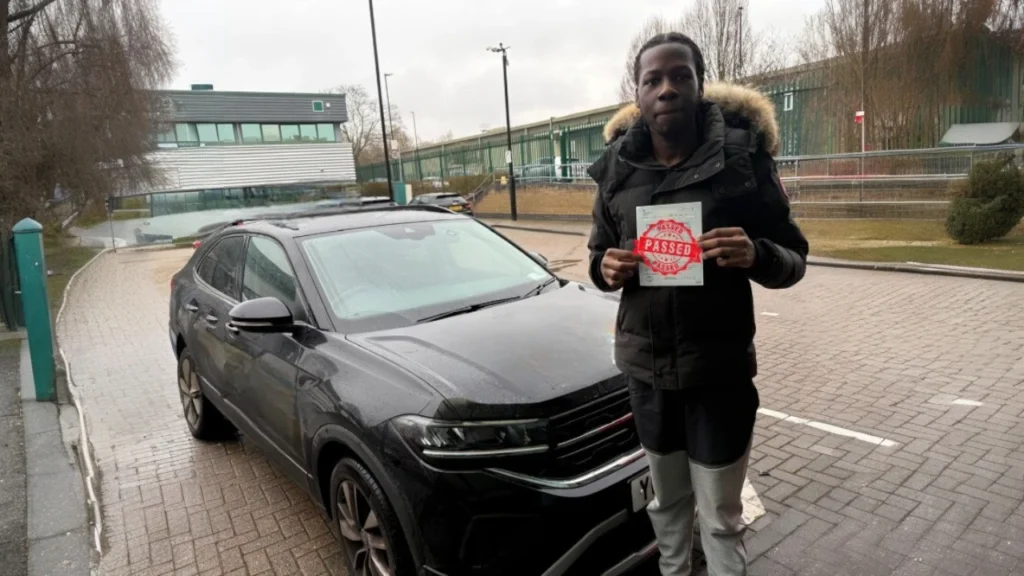
Passing your driving test is a massive achievement. You’ve worked hard, conquered your nerves, and earned the freedom of the open road. But here’s something many new drivers don’t realise: the learning doesn’t stop when you pass. In fact, the first two years after passing are a critical period with special rules that every new driver must understand.
This guide covers everything you need to know about new driver rules in the UK – from the 2-year probation period and the strict 6-point limit, to proposed 2026 changes that could affect you. Whether you’ve just passed with a driving school in Ilford or found the cheapest driving instructor near me, knowing these rules is essential for protecting your licence. Think of it as the final chapter in your journey to ace your driving test – because staying safe and legal after you pass is just as important as passing in the first place .
Part 1: The 2-Year Probation Period – What It Means
Under the Road Traffic (New Drivers) Act 1995, all new drivers in Great Britain are on probation for two years after passing their first driving test .
How It Works
- The probation period applies to drivers of all ages, not just young drivers
- It starts the moment you pass your practical test
- It lasts for exactly 2 years from the date on your pass certificate
What’s Different During Probation
During these two years, you’re subject to a much stricter penalty point limit than experienced drivers .
| Driver Status | Penalty Point Limit | Consequence if Exceeded |
|---|---|---|
| New driver (first 2 years) | 6 points | Licence revoked |
| Experienced driver | 12 points within 3 years | Disqualification |
This includes any points you received as a learner driver – they carry over and count towards the 6-point limit .
Part 2: The 6-Point Rule – What Gets Your Licence Revoked
If you accumulate 6 or more penalty points within your first 2 years of driving, your licence will be automatically revoked by the DVLA .
How Points Add Up
Here are common offences and their point values:
| Offence | Penalty Points |
|---|---|
| Speeding | 3-6 points |
| Using a mobile phone while driving | 6 points |
| Driving without insurance | 6-8 points |
| Failing to stop after an accident | 5-10 points |
| Careless driving | 3-9 points |
| Running a red light | 3 points |
| No MOT | 0 points (fine only) |
| No seatbelt | 0 points (fine only) |
The maths is simple: just two speeding tickets (3 points each) or one mobile phone offence (6 points) and your licence is gone .
What Happens If Your Licence Is Revoked
If you reach 6 points within 2 years :
- Your licence is automatically revoked
- You must reapply for a provisional licence
- You can only drive as a learner (with L-plates and supervision)
- You must retake both the theory and practical tests
- You pay for everything again
Note: This applies even if you paid for offences by fixed penalty notice .
Part 3: What About Points from Other Countries?
The rules cover drivers who:
- Passed their first test in the UK, EU/EEA, Isle of Man, Channel Islands, or Gibraltar
- Exchanged a foreign licence for a UK licence and later passed a UK test for another vehicle type
If you exchanged a foreign licence without taking a UK test, the 2-year probation period does not apply .
Part 4: Insurance for New Drivers – What You Need to Know
As a new driver, insurance will be one of your biggest ongoing costs. Here’s what affects your premium :
Why New Drivers Pay More
- Drivers aged 17-24 account for just 7% of licence holders but are involved in 24% of fatal/serious collisions
- Around 25% of all insurance claims are made by drivers under 25
Average Insurance Costs (2026)
For a 21-year-old driver with 2 years’ experience :
- Average annual premium: £1,098.23 (2025 figure)
- Cheapest found: From £679.63 (telematics policy)
- Third-party only: Often MORE expensive than comprehensive (high-risk drivers choose it, so insurers price accordingly)
How to Save Money on Insurance
- Choose a low insurance group car – small engines, standard models (VW Up, Vauxhall Corsa)
- Consider black box (telematics) insurance – proves you’re a safe driver, can significantly reduce premiums
- Add a named experienced driver – a parent on your policy can lower costs
- Pay annually if you can – monthly payments include interest (up to 31% more)
- Increase voluntary excess – but make sure you can afford it if you need to claim
- Park off-road – garage or driveway is cheaper than street parking
- Compare quotes 20-29 days before renewal – cheapest prices are typically 20 days before
- Build no-claims bonus – each claim-free year reduces future premiums
Legal Requirement
You MUST have at least third-party insurance to drive on public roads. Driving without insurance carries :
- £300 fixed penalty (on the spot)
- 6-8 penalty points
- Unlimited fine and disqualification if taken to court
- Vehicle can be seized and crushed
Part 5: Vehicle Maintenance and Legal Requirements
As a new driver, you’re responsible for keeping your car legal .
MOT Testing
- Cars must pass an MOT 3 years from first registration
- Then every year after that
- Maximum fine for no MOT: £1,000
Vehicle Tax (VED)
- Must be paid on all vehicles used or kept on public roads
- If off-road, you must declare SORN (Statutory Off-Road Notification)
Driving Licence Updates
- You MUST inform DVLA if you change your name or address
- Keep your licence details current
Production of Documents
Police can ask to see :
- Your driving licence
- Insurance certificate
- MOT certificate (if applicable)
If you can’t produce them immediately, you may have 7 days to take them to a police station.
Part 6: Proposed 2026 Changes – What’s on the Horizon
The government has announced significant proposed changes that could affect new drivers .
1. Minimum Learning Period (Consultation Open)
The government is consulting on introducing a minimum learning period before learners can take their test . Options include:
- Minimum time period (e.g., 6 months between theory and practical)
- Minimum supervised hours (e.g., 40-50 hours)
- Structured learning syllabus
- Logbook to record practice
Why? Currently, 17-24-year-olds account for 6% of licence holders but 24% of fatal/serious collisions .
2. Lower Drink Drive Limit for New Drivers
Proposed: 20mg of alcohol per 100ml of blood for new drivers (near-zero tolerance) .
| Current Limit | Proposed (for new drivers) |
|---|---|
| 80mg (England/Wales) | 20mg |
| 50mg (Scotland) | Could align with lower limit |
This would represent a near-zero-tolerance approach for novice drivers .
3. Stronger Penalties for Motoring Offences
The government is consulting on :
- Adding penalty points for seatbelt offences (currently fine only)
- Temporary licence suspension for suspected drink/drug driving
- Increased penalties for uninsured and unlicensed driving
- Stricter enforcement for no MOT and false number plates
4. Important: These Are NOT Law Yet
These are proposals under consultation – nothing changes immediately . Consultations run until early 2026, then Parliament would need to approve any changes.
Part 7: Practical Tips for New Drivers
Stay Safe in Your First Year
- Keep displaying L-plates – even after passing, they encourage other drivers to give you space
- Drive with a more experienced passenger occasionally – they can spot bad habits
- Avoid night driving initially – build up gradually
- Take a Pass Plus course – might reduce insurance, builds motorway/ night/ all-weather skills
- Don’t rush modifications – tell your insurer about any changes
Avoid Common New Driver Mistakes
| Mistake | Why It’s Risky | Better Approach |
|---|---|---|
| Speeding | 3-6 points – half your allowance | Stick to limits, use cruise control |
| Phone use | 6 points – instant revocation | Phone in glovebox, use hands-free ONLY |
| Overconfidence | Leads to crashes | Stay humble, keep learning |
| Showing off | Peer pressure causes accidents | Drive your drive, not theirs |
| Not checking tyres | Illegal, unsafe, wastes fuel | Check monthly |
The “What If” Scenario
What if you get points as a learner?
They count towards your 6-point limit. If you pass your test with 3 points already, you only have 3 points “spare” for your first 2 years .
Part 8: Frequently Asked Questions
Q: What if I passed my test abroad?
If you exchanged a foreign licence without taking a UK test, the 2-year probation rules do not apply .
Q: Do the rules apply in Scotland, Wales, and England?
Yes, the New Drivers Act applies across Great Britain .
Q: Can I drive immediately after passing?
Yes – once you pass, you can drive immediately, but you must be insured .
Q: What if my licence is revoked?
You must reapply for a provisional licence, display L-plates, be supervised, and retake both tests .
Q: How do I check my points?
View your driving licence record online at GOV.UK .
Q: Will a lower drink drive limit definitely happen?
It’s under consultation – not law yet .
Conclusion: Your Licence, Your Responsibility
Passing your driving test is a fantastic achievement – but it’s also the beginning of a new phase of learning. The new driver rules are designed to protect you and everyone else on the road during your most vulnerable period. Remember:
- 2 years probation
- 6 points = licence revoked
- Insurance is expensive – shop around
- Keep your car legal (MOT, tax, insurance)
- Stay updated on proposed 2026 changes
The best new drivers are the ones who stay humble, keep learning, and never stop improving.
Ready to start your post-test journey with confidence?
📞 Call Driving Academy Ltd at 07399 696344 – Even after you pass, we’re here to help with Pass Plus, motorway lessons, and refresher training.
📧 Email: drivingacademyltd@gmail.com
📍 Visit Us: 101 Whitechapel High Street, London, E1 7RA
Stay safe, stay legal, and enjoy the freedom of the road.