


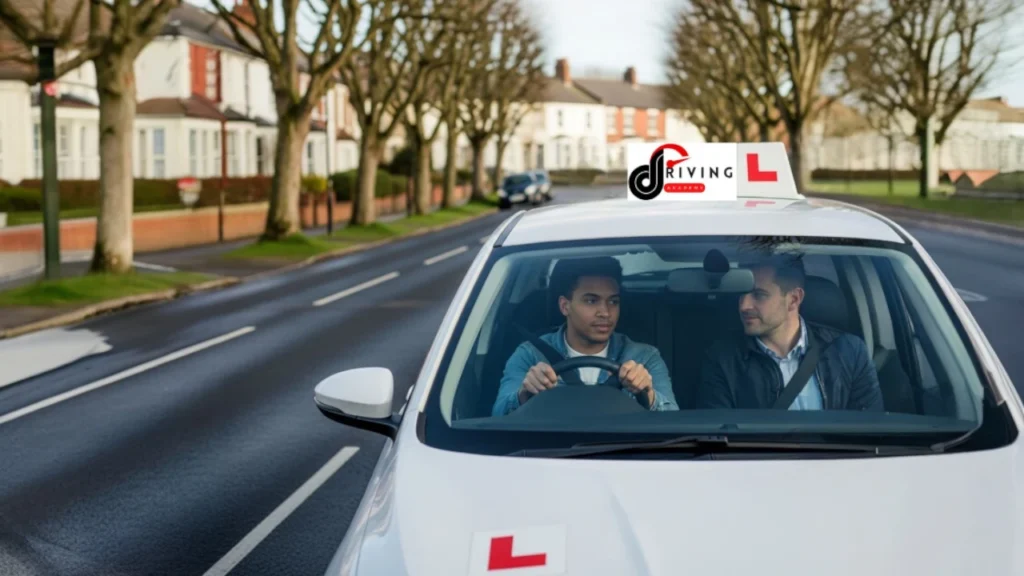
For many drivers—whether newly qualified after lessons with a driving school in Ilford or experienced but anxious—lacking driving confidence can be paralysing. It transforms what should be a liberating skill into a source of daily stress. The crucial thing to understand is that confidence behind the wheel is not something you’re born with; it’s a skill built through correct practice, knowledge, and mindset. This guide moves beyond vague advice to provide actionable strategies used by professional instructors to help drivers of all levels build genuine, lasting confidence. It’s a journey as important as understanding the UK penalty points system—one protects your licence, the other protects your peace of mind.
Part 1: Understanding the Roots of Driving Anxiety
Before you can build confidence, it helps to understand what erodes it. Common causes include:
- Fear of Making Mistakes: Worry about stalling, taking a wrong turn, or being judged by other drivers.
- Lack of Experience: Inadequate practice in different conditions (night, rain, heavy traffic).
- Negative Past Experiences: A near-miss, a previous accident, or a stressful learning environment, perhaps with an unsupportive cheapest driving instructor near me who focused on criticism over encouragement.
- Overwhelm: The sheer volume of simultaneous tasks (steering, gears, mirrors, signals, observations) can feel insurmountable.
Part 2: Foundational Strategies from Professional Instructors
2.1 Mastery Through Repetition in Low-Risk Environments
Confidence comes from competence. Start where the pressure is zero.
- Revisit the Basics: In a quiet, empty car park, practice moving off, stopping, and simple manoeuvres until they feel automatic. This frees up mental bandwidth for traffic.
- Route Familiarisation: Drive the same short, simple route repeatedly—perhaps around your local neighbourhood—until it feels completely comfortable before adding new roads.
2.2 The Power of Positive Self-Talk and Goal Setting
Your internal dialogue is your co-pilot.
- Replace “Don’t” with “Do”: Instead of “Don’t stall,” think “Smooth clutch control.” Instead of “Don’t get lost,” think “I’ll follow the signs.”
- Set Micro-Goals: Each drive, set one tiny, achievable goal. “Today, I will check my mirrors three times before signaling.” Success in small goals builds momentum.
- Normalise Mistakes: Remind yourself that every driver makes minor errors. A stall or a missed turn is a learning point, not a catastrophe.
Part 3: Progressive Exposure: The Step-by-Step Method
Avoid throwing yourself in the deep end. Systematically expand your comfort zone.
- Quiet Residential Streets: Practice at quiet times of day.
- Local High Streets: Tackle busier roads with traffic lights and roundabouts during off-peak hours (e.g., mid-morning).
- Dual Carriageways: Build up to higher speeds with a supportive passenger.
- Motorways: Practice joining, lane discipline, and leaving with a qualified companion.
- Challenging Conditions: Finally, practice in rain, at dusk, and in heavier traffic.
Each step should only be taken when you feel mostly comfortable at the previous level.
Part 4: The Role of a Supportive, Professional Instructor
This is where choosing the right learning environment is transformative. A supportive driving school is a confidence incubator.
- A Patient, Calm Presence: A good instructor provides a calm, controlled atmosphere. Their dual controls offer a psychological safety net.
- Constructive Feedback: They frame feedback positively: “Let’s work on making those gear changes smoother,” not “Your gear changes are terrible.”
- Structured Progress: They have a syllabus that builds skills logically, preventing you from feeling overwhelmed. They celebrate small victories with you.
- Mock Tests: For post-test drivers, a refresher lesson or mock test with an instructor can identify specific worries and provide targeted reassurance.
Choosing a school like Driving Academy Ltd over simply the cheapest driving instructor near me means investing in an environment designed to build you up, not just log hours.
Part 5: Practical Techniques for Managing Anxiety in the Moment
When anxiety spikes during a drive:
- Breathe: Take slow, deep breaths (in for 4, hold for 4, out for 6). This calms your nervous system.
- Talk It Out: Verbally narrate what you’re doing and seeing: “Mirror… signal… safe to move…”. It focuses your mind.
- Use Your Passengers: Ask a trusted passenger to handle navigation or music, so you can focus solely on driving.
- It’s Okay to Pull Over: If you feel overwhelmed, indicate, pull over safely when possible, and take a moment to regroup. This is a sign of responsible driving, not weakness.
Part 6: The Confidence-Knowledge Loop: Understanding Rules Empowers You
Knowledge is a powerful antidote to anxiety. Understanding the UK penalty points system isn’t just about avoiding fines; it’s about knowing the clear rules of the road. This certainty reduces the “fear of the unknown.” When you know the legal expectations for speeding, phone use, and right-of-way, you can drive with more certainty. Confidence grows when you feel informed and in control of your legal responsibilities.
Conclusion: Your Journey to Confident Driving
Building confidence while driving is a gradual, personal journey. It requires patience, a structured approach, and often, the right supportive guide. By breaking down the challenge, practicing strategically, reframing your mindset, and seeking professional support, you can replace anxiety with assurance. Remember, a confident driver is not a perfect driver, but a prepared, calm, and competent one.
Ready to build your confidence with an instructor who supports your journey?
📞 Call Driving Academy Ltd at 07399 696344 – Our patient, expert instructors in Ilford and London specialise in creating a positive, confidence-building learning environment.
📧 Email: drivingacademyltd@gmail.com
📍 Visit Us: 101 Whitechapel High Street, London, E1 7RA
Take the first step towards confident, enjoyable driving. Book your lesson today.