


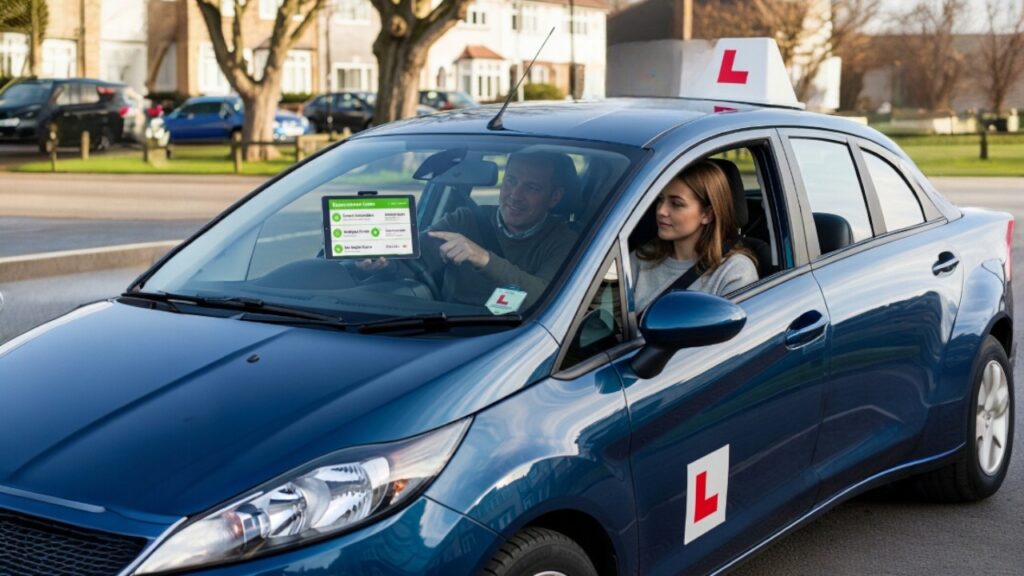
With fuel prices remaining high and climate change at the forefront of global concerns, learning to drive economically isn’t just good for your wallet—it’s essential for the planet. The good news? Eco-friendly driving tips aren’t complicated or expensive to implement. They’re simply about adopting smoother, more thoughtful driving habits that reduce fuel consumption, lower emissions, and often make you a safer driver in the process. Whether you’re just starting lessons with a driving school in Ilford or have found the cheapest driving instructor near me, incorporating these techniques from day one will save you money for as long as you drive. Think of it as practical training that complements everything else you’re learning, including using tips to pass your theory test without stress.
Part 1: The Core Principle – Smoothness Saves Fuel
The single most important eco-driving technique is also the simplest: be smooth. Aggressive acceleration and harsh braking are the enemies of fuel efficiency.
Why Smoothness Matters
- Acceleration: Every time you floor the accelerator, you’re dumping extra fuel into the engine. Gentle, progressive acceleration uses far less.
- Braking: Braking converts your car’s forward momentum into heat energy—wasted energy that you paid for with fuel. The less you brake harshly, the more you preserve that momentum.
The “Egg” Technique
Imagine there’s an egg between your foot and the accelerator pedal. Press gently enough that you wouldn’t crack it. This mental image helps train smooth acceleration.
The Numbers
According to the RAC, aggressive driving can increase fuel consumption by as much as 30% on motorways and 40% in stop-start traffic. Smooth driving isn’t just nice—it’s dramatically cheaper.
Part 2: Master Your Gears for Maximum Efficiency
Using your gears correctly can dramatically improve fuel economy.
Shift Up Early
- Petrol cars: Change up around 2,000–2,500 RPM
- Diesel cars: Change up around 1,500–2,000 RPM
Don’t “rev” the engine unnecessarily. Higher RPMs mean more fuel burned.
Block Gear Changing
Skip gears when it’s safe and appropriate. For example, going from 5th to 3rd for an overtake, or from 4th to 2nd approaching a roundabout. This reduces unnecessary gear changes and keeps the engine in its efficient range.
Avoid Coasting
Some drivers think coasting (driving in neutral or with the clutch down) saves fuel. It doesn’t in modern cars. Modern engines cut fuel completely when you’re in gear with your foot off the accelerator (engine braking). Coasting actually uses a small amount of fuel to keep the engine idling.
The 1.5-Litre Rule
Most modern cars are most fuel-efficient when the engine is running between 1,500 and 2,500 RPM. Try to keep it in this “sweet spot” for normal driving.
Part 3: Speed and Aerodynamics – The Hidden Fuel Drain
Observe Speed Limits
Fuel consumption increases dramatically at higher speeds due to wind resistance. Driving at 80mph can use up to 25% more fuel than driving at 70mph. Stick to speed limits—it’s safer, legal, and cheaper.
The 70mph Reality
According to the Department for Transport, driving at 70mph uses up to 9% more fuel than at 60mph, and up to 15% more than at 50mph. Every 5mph over 55mph is equivalent to paying an extra 15p per litre for fuel.
Reduce Drag
- Remove roof racks and boxes when not in use. An empty roof box can increase fuel consumption by 10–20%.
- Keep windows closed at high speeds. On motorways, open windows create significant drag. Use your car’s ventilation system instead.
- Remove unnecessary accessories: Bike racks, spoilers, and even mud flaps can increase drag.
Part 4: Anticipation – The Pro Driver’s Secret
Reading the road ahead is a skill that saves both fuel and stress.
Look Ahead
Scan the road as far ahead as possible. If you see traffic slowing, a red light ahead, or a roundabout approaching, lift off the accelerator early and let the car’s momentum carry you forward. This is called “engine braking” or “coasting in gear”—and it uses zero fuel.
Maintain a Steady Speed
Constant speed is more efficient than constant accelerating and braking. Use cruise control on motorways if you have it. On other roads, try to maintain a steady pace by anticipating changes rather than reacting to them.
The 12-Second Rule
Try to look at least 12 seconds ahead (about one car length for every 5mph). This gives you time to anticipate and react smoothly rather than braking harshly at the last moment.
Leave a Gap
Keeping a safe distance from the vehicle ahead (the two-second rule in good conditions, more in rain) gives you space to react smoothly to changes in their speed without harsh braking.
Part 5: Car Maintenance – Your Car’s Health Affects Its Appetite
A well-maintained car is a fuel-efficient car. This is where basic car care knowledge from a quality driving school pays off.
Check Tyre Pressure Monthly
Under-inflated tyres increase rolling resistance. Just 1 PSI below recommendation can reduce fuel efficiency by 0.5% . Check pressures monthly and before long journeys.
The Tyre Pressure Fact
Correct tyre pressure can improve fuel economy by up to 3% . Under-inflated tyres also wear out faster and are less safe.
Remove Excess Weight
Clear out your boot. An extra 50kg of weight can increase fuel consumption by 1–2% . That old buggy or set of golf clubs you never use? Out.
Regular Servicing
A well-serviced engine with clean air filters, proper oil, and correctly functioning sensors runs much more efficiently. Don’t skip services.
Use the Right Oil
The correct grade of engine oil (as specified in your handbook) reduces friction and improves fuel economy by 1–2% .
Part 6: Journey Planning – Smart Trips Save Fuel
Combine Short Trips
A cold engine uses significantly more fuel. Several short trips from cold use more fuel than one longer trip covering the same total distance. Combine errands into one journey where possible.
Avoid Rush Hour
Stop-start traffic is a fuel nightmare. If you can, plan journeys outside peak times. The AA estimates that stop-start driving can increase fuel consumption by up to 40% .
Use Sat-Nav
Modern sat-navs often suggest the most fuel-efficient route, not just the fastest. They can also help you avoid getting lost and wasting fuel.
Check Traffic Before You Go
A quick check of traffic apps can help you avoid jams that waste fuel and time.
Consider Alternatives
For very short journeys (under 1 mile), consider walking or cycling. It’s free, healthy, and zero-emission. The average car engine is at its most inefficient for the first mile of any journey.
Part 7: Air Conditioning – Use It Wisely
- At low speeds (under 40 mph): Opening windows is more fuel-efficient than using air conditioning.
- At high speeds (over 40 mph): Air conditioning creates less drag than open windows, so use the A/C.
- Don’t use “Max” unnecessarily: Running A/C on full blast uses more fuel. Set it to a comfortable level.
- Park in the shade: In summer, parking in the shade keeps your car cooler and reduces the need for max A/C when you start driving.
The A/C Cost
Air conditioning can increase fuel consumption by 5–25% depending on the car and conditions. Use it wisely.
Part 8: The Connection Between Eco-Driving and Passing Your Test
Here’s something many learners don’t realise: the skills that make you an eco-driver are exactly the same skills that help you pass your driving test.
- Smooth acceleration and braking – Examiners love this. It’s a sign of control and anticipation.
- Anticipation and planning – A key mark of a safe driver. Eco-driving is all about looking ahead.
- Proper gear use – Essential for control and efficiency. Examiners assess this throughout your test.
- Observation and reading the road – The foundation of both safe driving and fuel efficiency.
The Examiner’s Perspective
According to DVSA data, driving faults related to control (including harsh acceleration and braking) are among the most common reasons for test failure. Mastering eco-driving techniques directly addresses these faults.
When you learn with a quality driving school in Ilford like Driving Academy Ltd, these eco-driving principles are woven into your lessons from day one. You’re not just learning to pass a test; you’re learning a lifelong skill that saves money, protects the environment, and keeps you safe. This holistic approach is something you rarely get from simply searching for the cheapest driving instructor near me.
And when it comes to the theory test, understanding the principles behind eco-driving can actually help. Questions about fuel efficiency, environmental impact, and vehicle maintenance appear regularly. So mastering these tips to pass your theory test without stress includes knowing your eco-driving facts.
Part 9: Quick Reference – Top 12 Eco-Driving Tips
- Accelerate gently – imagine an egg under your foot.
- Shift up early – 2000–2500 RPM for petrol, 1500–2000 for diesel.
- Maintain a steady speed – use cruise control on motorways.
- Anticipate traffic – lift off early and let the car coast in gear.
- Check tyre pressure monthly – under-inflated tyres waste fuel.
- Remove roof racks when not in use.
- Reduce weight – clear out your boot.
- Plan journeys – combine trips, avoid rush hour.
- Use A/C wisely – windows at low speed, A/C at high speed.
- Service regularly – a healthy car is an efficient car.
- Observe speed limits – 70mph uses 9% more fuel than 60mph.
- Look 12 seconds ahead – anticipate, don’t react.
Part 10: The Environmental Impact – Why It Matters Beyond Your Wallet
Every litre of petrol burned produces approximately 2.3kg of CO2. If you drive 10,000 miles a year and improve your fuel economy by just 10%, you’ll save:
- £200–£300 per year in fuel costs
- 250kg of CO2 emissions – the equivalent of planting 10 trees
Small changes by millions of drivers add up to a massive collective impact.
Conclusion: Small Changes, Big Savings
Eco-friendly driving isn’t about buying a new electric car or making huge lifestyle changes. It’s about adopting simple, smarter habits that together can reduce your fuel consumption by 15–30% . That’s hundreds of pounds a year saved, plus reduced emissions and a safer driving style.
The best time to start is now—and the best place to start is with quality instruction that embeds these habits from your very first lesson.
Ready to learn a driving style that saves money and the planet?
📞 Call Driving Academy Ltd at 07399 696344 – Our expert instructors in Ilford and London teach eco-friendly techniques as standard.
📧 Email: drivingacademyltd@gmail.com
📍 Visit Us: 101 Whitechapel High Street, London, E1 7RA
Drive smarter, save more. Book your lesson today.