


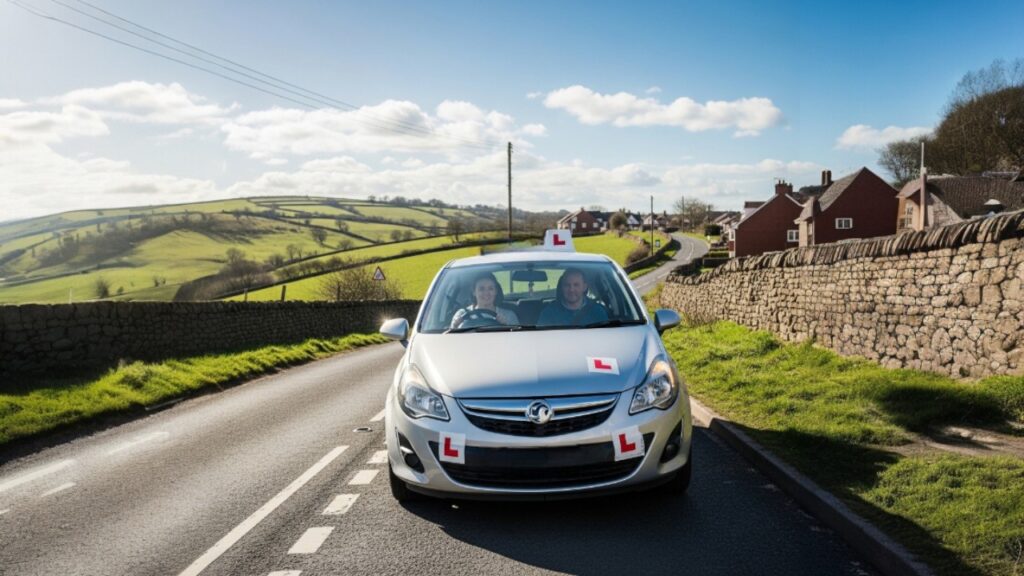
For many learner drivers, few moments are as nerve-wracking as stopping on a steep incline and needing to move off again. The fear of rolling back into the car behind, stalling in front of waiting traffic, or simply losing control can turn a simple hill into a major obstacle. However, with the right technique and understanding, you can handle hill starts confidently every time. This comprehensive hill start guide for beginners breaks down the process into simple, repeatable steps. Whether you’re learning with a driving school in Ilford or have found the cheapest driving instructor near me, mastering this skill is essential for both passing your test and safe, stress-free driving. It’s a foundational skill that, once conquered, builds immense confidence for all other manoeuvres.
Part 1: Understanding the Challenge – What Makes Hill Starts Different?
On a flat road, moving off is relatively simple: find the biting point, check your mirrors, and go. On a hill, gravity is working against you. Without proper technique, you can:
- Roll backwards when you release the foot brake.
- Stall the engine by releasing the clutch too quickly or not giving enough gas.
- Lurch forward uncontrollably if the biting point is too high.
The goal is to find the perfect balance between clutch, accelerator, and brake to move off smoothly without rolling back an inch.
Part 2: The Essential Pre-Hill Start Checklist
Before you even attempt to move, ensure you’ve done your safety checks:
- Handbrake ON: The handbrake is your best friend on a hill. It holds the car securely while you set up.
- Clutch Down: Press the clutch pedal fully to the floor.
- Select First Gear: Ensure you’re in first gear ready to move.
- Find the Biting Point: Slowly lift the clutch until you feel the car “pull” slightly and hear the engine note dip slightly. You’ll feel the front of the car rise a little. This is the biting point.
- Add a Little Gas: With the clutch at the biting point, gently press the accelerator to raise the revs to around 1500-2000 RPM. Hold it steady.
Key Tip: On a very steep hill, you’ll need slightly more gas and a slightly higher biting point than on a gentle slope.
Part 3: The Step-by-Step Hill Start Technique (Manual Car)
Follow these steps in order for a smooth, controlled hill start:
Step 1: Prepare
With the handbrake firmly on, clutch down, and first gear selected, find the biting point and add a little gas as described above. Your left foot is holding the clutch at the biting point, your right foot is holding steady on the accelerator.
Step 2: The “Ready” Check
Before moving, perform your safety checks:
- Check your interior mirror.
- Check your right door mirror (for traffic approaching from behind).
- Signal right if necessary, or if it helps other road users understand your intention.
Step 3: Release the Handbrake
This is the critical moment. With the biting point held steady and the revs up, release the handbrake smoothly but firmly.
What Should Happen: If you have the biting point correct, the car should remain stationary or very gently strain against the handbrake. When you release it, the car should not roll back.
Step 4: Move Off Smoothly
As the handbrake comes down, the car will want to move forward. You may need to:
- Ease the clutch up a tiny fraction more to transfer more drive.
- Gently increase pressure on the accelerator to maintain momentum.
The car should move off smoothly without jerking or rolling back.
Step 5: Cancel Signal & Drive On
Once you’re moving steadily, cancel your signal if you used one, and continue driving normally.
Part 4: The Hill Start Without a Handbrake (Advanced)
You might occasionally need to move off without using the handbrake (e.g., if your handbrake fails). This technique requires very precise pedal control and should only be attempted once you’re confident with the standard method.
- Keep your right foot firmly on the foot brake.
- Bring the clutch up to the biting point. You’ll feel the car “rock” slightly.
- Quickly but smoothly move your right foot from the brake to the accelerator, simultaneously adding gas while holding the clutch steady.
- As the car begins to move, fully release the clutch and drive away.
Warning: This method carries a higher risk of rolling back. Practice in a safe, quiet area first.
Part 5: Common Hill Start Mistakes & How to Fix Them
| Mistake | Why It Happens | How to Fix It |
|---|---|---|
| Rolling Back | Not enough clutch at biting point before releasing handbrake. | Hold the biting point longer. Feel the car “pull” before releasing the brake. |
| Stalling | Releasing the clutch too quickly after handbrake release, or not enough gas. | Raise the revs higher (1500-2000 RPM) and ease the clutch up slower. |
| Lurching Forward | Biting point too high; releasing clutch too fast with too much gas. | Find a lower biting point. Be smoother with clutch release. |
| Engine Over-revving | Too much gas without enough clutch. | Reduce accelerator pressure and bring clutch up slightly to meet it. |
| Panic and Hesitation | Nerves and lack of practice. | Practice on quiet hills repeatedly until the sequence becomes automatic. |
Part 6: How to Practice Hill Starts Safely
- Find a Quiet Hill: Start with a very gentle slope in a residential area with little traffic.
- Repeat the Sequence: Do 10-20 hill starts in a row until the movements feel natural.
- Gradually Increase Steepness: Once confident on gentle slopes, find a steeper hill and repeat the process.
- Practice on Different Surfaces: Wet roads require even smoother inputs to avoid wheel spin.
- Get Professional Feedback: An instructor from a reputable driving school can watch your technique and give instant corrections.
Part 7: The Role of Professional Instruction in Mastering Hill Starts
While a guide can explain the theory, nothing replaces having an expert in the passenger seat. A qualified instructor from a driving school in Ilford like Driving Academy Ltd provides:
- A Safe Environment: Dual controls mean they can prevent any dangerous roll-back.
- Real-Time Feedback: They can instantly tell you if your biting point is too low or your gas is too high.
- Structured Practice: They know the best local hills to practice on, progressing from easy to challenging.
- Confidence Building: Their calm, patient presence helps you stay relaxed, which is half the battle.
Choosing a quality school over simply the cheapest driving instructor near me ensures you learn this critical skill correctly, safely, and with the support you need. This expertise directly helps you master hill starts easily and pass your test with confidence.
Conclusion: From Fear to Freedom
Hill starts are a classic driving challenge, but they are also a skill that can be completely mastered with the right technique and practice. By understanding the sequence, practicing deliberately, and learning from a professional, you transform a moment of potential panic into a routine, controlled action. Remember, every driver who now glides up hills without a second thought was once a beginner, too.
Ready to conquer hills with calm, expert guidance?
📞 Call Driving Academy Ltd at 07399 696344 – Our patient instructors in Ilford and London specialise in building confidence with hill starts and every other driving skill.
📧 Email: drivingacademyltd@gmail.com
📍 Visit Us: 101 Whitechapel High Street, London, E1 7RA
Stop fearing hills. Start mastering them. Book your lesson today.