


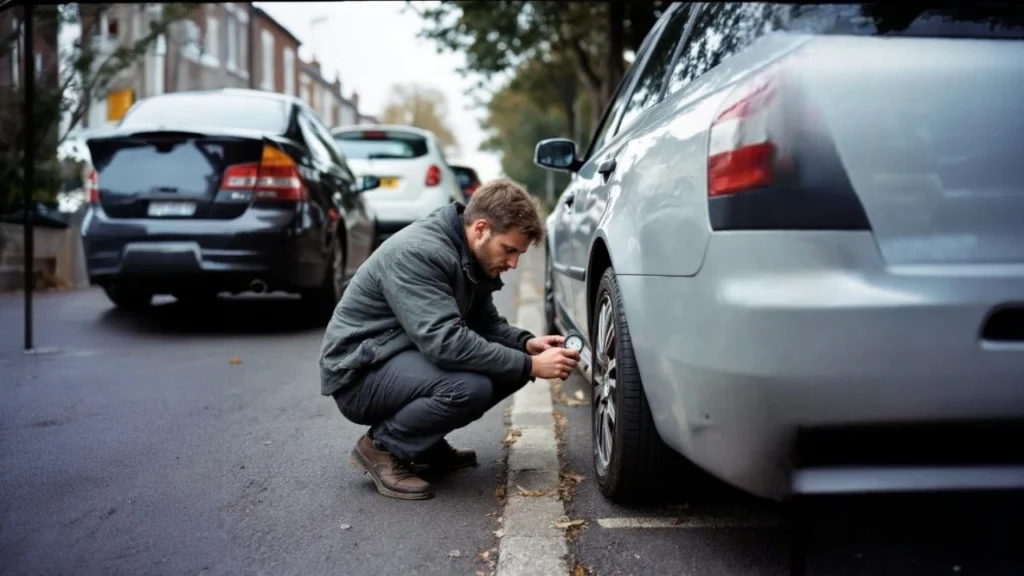
Your tyres are the only part of your car that touches the road. Their condition and pressure directly affect your safety, fuel economy, and the longevity of your vehicle. Yet according to TyreSafe research, one in five UK drivers have never checked their tyres . That’s a shocking statistic, especially considering that driving with illegal or poorly maintained tyres can result in fines of up to £2,500 per tyre and three penalty points on your licence .
Learning to check tyre pressure correctly is one of the simplest, most important car maintenance skills you can master. It takes just five minutes, requires no special tools beyond what you can find at any petrol station, and can save you money, improve your driving experience, and keep you legal on the road. Whether you’re a new driver learning with a driving school in Ilford or an experienced motorist who once searched for the cheapest driving instructor near me, this guide will ensure you never get tyre pressure wrong again. It’s a foundational skill that every responsible driver should master – right up there with knowing how to keep your car’s interior pristine (check out The Ultimate Guide to Car Interior Cleaning for more maintenance tips).
Part 1: Why Correct Tyre Pressure Is Non-Negotiable
Safety First
- Under-inflated tyres overheat at high speeds, increasing the risk of a blowout. They also reduce your ability to steer and brake effectively, compromising your safety .
- Over-inflated tyres have less contact with the road, reducing grip, especially in wet conditions. This smaller contact patch can seriously affect handling, particularly when speeding around corners or on slippery surfaces .
- Incorrect pressure affects braking distances and cornering stability .
Save Money on Fuel
Under-inflated tyres increase rolling resistance. Your engine has to work harder, burning more fuel. Just 1 PSI below recommendation can reduce fuel efficiency, and under-inflated tyres require more force (and fuel) to turn . This could end up costing you more at the pumps than necessary .
Extend Tyre Life
- Under-inflation wears the outer edges of the tyre .
- Over-inflation wears the centre of the tread .
- Correct pressure means even wear and maximum tyre life.
Avoid Hefty Fines
Driving with illegal tyres can result in fines of up to £2,500 per tyre and three penalty points on your licence . That’s potentially £10,000 and 12 points – and for new drivers, six points means automatic licence revocation.
Part 2: When and How Often to Check
Frequency
- At least once a month. Tyres naturally lose pressure over time (about 1-2 PSI per month). The RAC recommends checking your tyre pressure monthly to be sure you’re not driving on inadequately-inflated tyres .
- Before any long journey.
- After a significant temperature change. Cold weather reduces tyre pressure.
- If the car feels different. Reduced grip, pulling to one side, or a bumpy ride can indicate pressure issues.
When to Check
Check when tyres are COLD. “Cold” means the car hasn’t been driven for at least 2–3 hours. Driving heats up the tyres and increases pressure, giving a false reading . The best time is first thing in the morning before any journeys.
Part 3: What You’ll Need
- A reliable tyre pressure gauge. You can buy a digital or analogue gauge for home use, or use the machines at most UK petrol stations. Digital gauges are popular with car owners .
- An air compressor. Petrol stations have these, or you can buy a portable one. Air compressors are a great option if you prefer to inflate your tyres away from a petrol station forecourt .
- Your car’s recommended tyre pressures. Found in your owner’s manual, inside the fuel filler flap, or on a sticker inside the driver’s door frame .
Part 4: Step-by-Step Guide to Checking Tyre Pressure Correctly
Step 1: Find Your Recommended Pressure
Look up the correct pressure for your car. It will be shown in PSI (pounds per square inch) or BAR. Note that front and rear pressures may be different, especially if you carry passengers or heavy loads regularly.
Most cars have a sticker inside the driver’s door frame that tells you the correct tyre pressure . Information will be provided in relation to various loadings (two occupants, four occupants, etc), so pick the one that suits your needs.
Example:
- Front: 32 PSI
- Rear: 30 PSI
Step 2: Prepare Your Vehicle
Ensure the vehicle is parked safely on level ground, with the engine switched off and the handbrake engaged .
Step 3: Remove the Valve Cap
Unscrew the small black cap from the tyre valve on your first tyre. Keep it in a safe place (like your pocket) so you don’t lose it.
Step 4: Attach the Pressure Gauge
- If using a petrol station gauge: Press the gauge firmly onto the valve stem. You should hear a brief hiss of air, then the reading will appear.
- If using a hand-held gauge: Push it onto the valve firmly and hold until the reading stabilises .
Press down the gauge evenly on the valve stem to ensure you get an accurate reading .
Step 5: Read the Pressure
Note the reading. Compare it to your recommended pressure.
Step 6: Add or Release Air
- If pressure is too LOW: Use the air compressor to add air in short bursts. Avoid over-inflation by adding small amounts of air at a time . Recheck after each burst until you reach the correct pressure.
- If pressure is too HIGH: Use the tip of a flat-head screwdriver to push on the metal pin on the valve stem to release air . Recheck frequently.
Step 7: Repeat for All Tyres
Don’t forget the spare tyre (if you have one) – it’s often overlooked but essential in an emergency .
Step 8: Replace Valve Caps
Screw all valve caps back on firmly. They keep dirt and moisture out of the valve mechanism .
Part 5: Understanding Tyre Pressure Measurements
PSI and BAR Explained
There are two systems used to measure tyre pressure: bar (metric) and pounds per square inch or PSI (imperial) . These are usually quoted together in user handbooks or tyre pressure stickers.
1 Bar = 14.5 PSI if you need to convert .
At petrol stations you’ll almost always be able to select the correct pressure based on either of these measurements. A good home pressuriser will display both numbers on their gauge too .
Part 6: Using Petrol Station Air Machines
Most UK petrol stations have air compressors, often with built-in pressure gauges. Many are now free, but some charge a small fee (usually £1 for a few minutes of use).
Tips for Petrol Station Use
- Park close enough that the hose reaches all four tyres.
- Set the machine to your desired pressure if it has an auto-stop function.
- Work quickly, as most machines have a time limit.
- Don’t trust the built-in gauge completely—they can be inaccurate. Consider carrying your own gauge to double-check.
On most forecourts you’ll find both a pressure gauge (that gives readings in bar and PSI) and an air pump . Many come with +/- buttons that enable you to set the pressure as needed, and there’s often a ‘rapid fill’ button if your tyre is particularly low on air .
Part 7: Checking Tyre Tread Depth – The 20p Test
While you’re checking pressure, it’s the perfect time to check tread depth too.
The Legal Requirement
In the UK, your tyres need a minimum tread depth of 1.6mm across the central three-quarters of the tyre to be legal . However, many tyre experts recommend replacing tyres once the tread wears down to 3mm for optimal safety .
How to Perform the 20p Test
- Take a 20p coin.
- Insert it into the main tread grooves of your tyre .
- If you can see the outer rim of the coin, your tread may be below the legal limit .
Penalties for Illegal Tyres
Driving with illegal tyres can result in fines of up to £2,500 per tyre and three penalty points on your licence .
Part 8: Common Tyre Problems to Look For
Visual Inspection
While checking pressure and tread, look for:
- Cuts, bulges, or cracks on the sidewalls
- Uneven wear patterns – can indicate incorrect inflation, alignment problems, or internal damage
- Nails or other objects embedded in the tread
- Debris stuck in the tyre – the most obvious sign of a potential slow puncture
Signs of Tyre Problems While Driving
| Symptom | Possible Cause |
|---|---|
| Vibrations through steering wheel | Unbalanced wheels, alignment issues, or tyre damage |
| Pulling to one side | Under-inflation, slow puncture, or alignment problems |
| Humming or roaring noises | Uneven wear from misalignment or underinflation |
| Squealing tyres | Tracking or alignment problems |
| Clicking sounds (increases with speed) | Debris stuck in the tyre making contact with the road |
Part 9: Understanding Slow Punctures
What Is a Slow Puncture?
Slow punctures release air from your tyre at a much slower rate than traditional punctures and can go unnoticed for longer periods . If enough air is released, your tyre will eventually lose pressure and become unsafe.
How to Identify a Slow Puncture
- Debris stuck in the tyre – look out for screws or any other debris piercing your tyres
- Pulled steering – if you loosen your grip on the steering wheel on a flat road, you might notice your car pulls to the side
- Vibrating steering wheel – your steering wheel can become unbalanced, causing the controls to vibrate, particularly at high speed
- Poor handling – your vehicle doesn’t feel as responsive when turning
- Worn tyre sidewall – low-pressure tyres often come into contact with the road, leading to damage over time
- Misshapen tyre – a tyre that appears out of shape usually indicates a change in pressure
How Do Slow Punctures Happen?
Slow punctures are usually caused by a sharp object piercing the tyre or the impact of driving over a pothole or raised kerb. A faulty valve can also lead to air leaks .
Can You Drive on a Slow Puncture?
While it’s possible to drive with a slow puncture, doing so increases the chances of the puncture growing in size and releasing more air . The increasing loss of pressure will eventually affect your car’s handling and safety before your tyre becomes completely flat. If you suspect a slow puncture, get it checked by a professional as soon as possible.
Part 10: Low Pressure vs High Pressure – What Happens?
Low Tyre Pressure
Allowing tyre pressure to run low increases the contact area between your tyres and the road. This leads to :
| Effect | Consequence |
|---|---|
| Increased resistance | More fuel needed – engine works harder |
| Uneven wear | Premature wear to the edges of tyres |
| Reduced brake efficiency | Braking time increases |
| More punctures | Tyres with less air are more prone to punctures |
High Tyre Pressure
An excessively-inflated tyre has a smaller area of contact with the road and can be very unsafe :
| Effect | Consequence |
|---|---|
| Loss of control | Reduced contact affects handling, especially on wet surfaces |
| Reduced brake efficiency | Smaller contact area means tyres work harder to grip |
| Uneven wear | Middle of tyre bulges, leading to premature centre wear |
Does Higher Tyre Pressure Give Better Mileage?
Although low-pressure tyres have a negative effect on your mileage, it’s wrong to assume that over-inflating your tyres will improve fuel efficiency. High-pressure tyres become stiff and require more fuel to navigate bumps and irregularities in the road .
Part 11: Frequently Asked Questions
Q: How often should I check my tyre pressure?
A: At least once a month, and before any long journey .
Q: Should I check tyre pressure when tyres are hot or cold?
A: Always check when cold – meaning the car hasn’t been driven for at least 2-3 hours .
Q: What’s the legal minimum tread depth in the UK?
A: 1.6mm across the central three-quarters of the tyre .
Q: What’s the penalty for illegal tyres?
A: Up to £2,500 fine per tyre and three penalty points on your licence .
Q: Can I check my tyre pressure at a petrol station?
A: Yes. Most UK petrol stations have air pumps with pressure gauges .
Q: Where can I find my car’s recommended tyre pressure?
A: In your owner’s manual, on a sticker inside the driver’s door frame, or sometimes on the fuel filler flap .
Q: How do I know if I have a slow puncture?
A: Signs include pulling to one side, vibrating steering wheel, poor handling, or visible debris in the tyre .
Q: Can I drive on a tyre with low pressure?
A: It may be possible, but your driving will be seriously affected. Get it checked by a professional as soon as possible .
Q: How long do tyres last?
A: As a general rule, front tyres last around 20,000 miles, while rear tyres could last 40,000. Michelin recommends checking tyres thoroughly at least once a year after five years of use, and replacing 10-year-old tyres even if they appear in good condition .
Part 12: The Link Between Tyre Care and Safe Driving
Learning to drive with a driving school in Ilford taught you how to handle the car. But being a truly safe driver means understanding the machine you’re controlling. Regular tyre checks:
- Prevent breakdowns – especially on motorways
- Save money – correct pressure improves fuel economy
- Keep you legal – avoid fines and points
- Build confidence – knowing your car is safe lets you focus on the road
This is especially important for new drivers, who are statistically at higher risk in their first months of independent driving. Good car care is part of being a responsible driver – right up there with understanding road signs and mastering essential driving skills.
Conclusion: Five Minutes That Could Save Your Life
Learning to check tyre pressure correctly takes just five minutes once a month. In that time, you could:
- Prevent a blowout on the motorway
- Improve your fuel economy
- Spot a slow puncture before it becomes dangerous
- Avoid £2,500 fines and penalty points
- Extend the life of your tyres
Make it a habit. Pick a day (Sunday is perfect) and stick to it. Your car – and your wallet – will thank you.
Ready to become a fully confident, car-savvy driver?
📞 Call Driving Academy Ltd at 07399 696344 – We teach more than just driving. Our instructors help you understand every aspect of car ownership, from weekly checks to advanced skills. Based in Whitechapel, serving Ilford and London.
📧 Email: drivingacademyltd@gmail.com
📍 Visit Us: 101 Whitechapel High Street, London, E1 7RA
Your journey to confident, responsible driving continues here. Book a refresher or Pass Plus course today.