


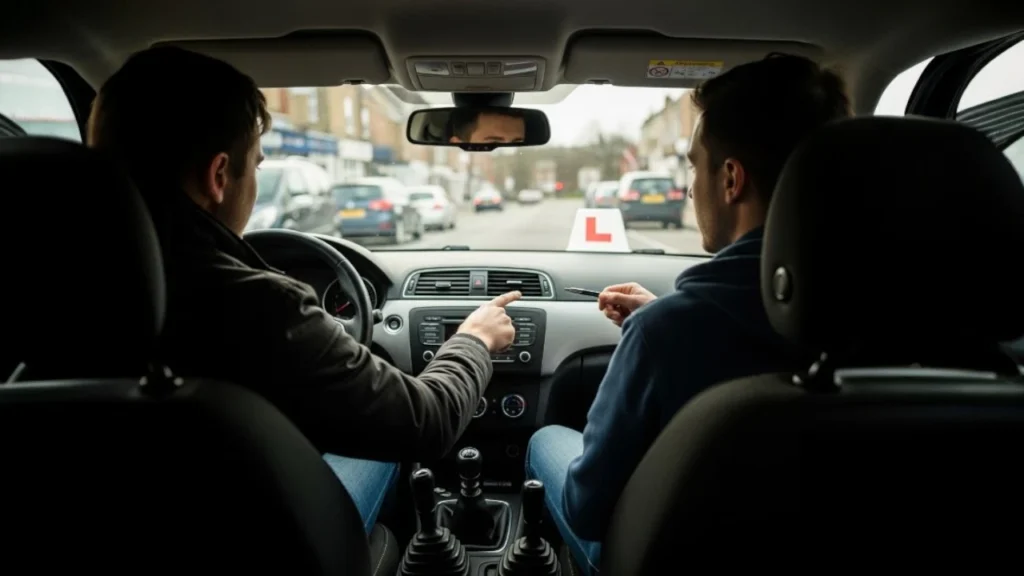
The UK Highway Code is more than just a book—it’s the foundation of everything you’ll do on the road. It contains hundreds of rules, many of which are legal requirements. Violating them can lead to fines, penalty points, or even disqualification . For learners, mastering the UK Highway Code basics isn’t optional; it’s essential for passing your theory test, impressing your examiner on the practical test, and becoming a safe, responsible driver for life.
Whether you’re learning with a driving school in Ilford or have found the cheapest driving instructor near me, a solid grasp of the Highway Code underpins every lesson. This guide covers the fundamental rules every beginner must know, from signals and speed limits to road markings and stopping distances. It’s the starting point for developing the essential driving skills every UK beginner must master .
Part 1: The Golden Rules of Using the Road
Signals – Your Way of Communicating
Signals warn and inform other road users of your intended actions . Getting them right is crucial.
Key rules for signalling :
- Give clear signals in plenty of time, having checked it’s not misleading to signal at that moment
- Use them before changing course or direction, stopping, or moving off
- Cancel them after use
- Make sure your signals won’t confuse others. For example, if you want to stop after a side road, don’t signal until you’re passing the road. Signalling earlier might give the impression you intend to turn into it
- Use an arm signal to emphasise or reinforce your signal if necessary
Important: Signalling does NOT give you priority. You must still check it’s safe to proceed .
Watch Out for Other Signals
You should also :
- Watch out for signals given by other road users and proceed only when satisfied it’s safe
- Be aware that an indicator on another vehicle may not have been cancelled
Obeying Official Signals
You MUST obey signals given by :
- Police officers
- Traffic officers
- Traffic wardens
- School crossing patrols
If the police want to stop your vehicle, they’ll attract your attention by flashing blue lights, headlights, or sounding their siren, usually from behind. You MUST then pull over and stop as soon as it’s safe .
Part 2: Speed Limits – The Numbers You Must Know
Speed limits are maximums, not targets. You must never drive faster than the limit for your road and vehicle type .
Speed Limits for Cars and Motorcycles (mph)
| Road Type | England & Scotland | Wales |
|---|---|---|
| Built-up areas (with street lights) | 30 mph | 20 mph |
| Single carriageways | 60 mph | 60 mph |
| Dual carriageways | 70 mph | 70 mph |
| Motorways | 70 mph | 70 mph |
Note: In Wales, the default speed limit in built-up areas is now 20 mph . If you’re learning or driving in Wales, this is crucial to remember.
Speed Limits for Other Vehicles
Different vehicles have different limits :
- Cars towing caravans/trailers: 50 mph on single carriageways, 60 mph on dual carriageways and motorways
- Buses, coaches, minibuses (up to 12m): 50 mph on single carriageways, 60 mph on dual carriageways, 70 mph on motorways
- Goods vehicles (up to 7.5 tonnes): 50 mph on single carriageways, 60 mph on dual carriageways, 70 mph on motorways
- Goods vehicles (over 7.5 tonnes) in England and Wales: 50 mph on single carriageways, 60 mph on dual carriageways, 60 mph on motorways
Part 3: Essential Driving Techniques
Flashing Headlights – What It Really Means
Only flash your headlights to let other road users know that you are there. Do not flash them to convey any other message or to intimidate others .
Crucial warning: Never assume that flashing headlights is a signal inviting you to proceed. Use your own judgement and proceed carefully .
Using Your Horn
The horn should be used only while your vehicle is moving and you need to warn other road users of your presence. Never sound it aggressively .
You MUST NOT use your horn :
- While stationary on the road
- When driving in a built-up area between 11:30 pm and 7:00 am
(except when another road user poses a danger)
Lighting Rules
You MUST :
- Ensure all sidelights and rear registration plate lights are lit between sunset and sunrise
- Use headlights at night, except on roads with lit street lighting (generally restricted to 30 mph or 20 mph in Wales)
- Use headlights when visibility is seriously reduced
You MUST NOT :
- Use any lights in a way which would dazzle or cause discomfort to other road users
- Use front or rear fog lights unless visibility is seriously reduced. Switch them off when visibility improves
Night is defined as the period between half an hour after sunset and half an hour before sunrise .
Hazard Warning Lights
These may be used when your vehicle is stationary to warn that it’s temporarily obstructing traffic. Never use them as an excuse for dangerous or illegal parking .
You MUST NOT use hazard warning lights while driving or being towed unless you’re on a motorway or unrestricted dual carriageway and need to warn drivers behind you of a hazard or obstruction ahead. Only use them long enough to ensure your warning has been observed .
Part 4: Braking and Control
Normal Braking
The safest way to brake is to do so early and lightly. Brake more firmly as you begin to stop. Ease the pressure off just before the vehicle comes to rest to avoid a jerky stop .
Emergency Braking
In an emergency, brake immediately. Try to avoid braking so harshly that you lock your wheels, as locked wheels can lead to loss of control .
If Your Brakes Get Wet
If you’ve driven through deep water, your brakes may be less effective. Test them at the first safe opportunity by pushing gently on the brake pedal. If they’re not fully effective, gently apply light pressure while driving slowly to help dry them out .
Skidding
Skidding is usually caused by braking, accelerating, or steering too harshly, or driving too fast for the road conditions .
If skidding occurs :
- Remove the cause by releasing the brake pedal fully or easing off the accelerator
- Turn the steering wheel in the direction of the skid
- For example, if the rear skids to the right, steer immediately to the right to recover
Coasting – What It Is and Why to Avoid It
Coasting describes a vehicle travelling in neutral or with the clutch pressed down. It can reduce driver control because :
- Engine braking is eliminated
- Vehicle speed downhill will increase quickly
- Increased use of the footbrake can reduce its effectiveness
- Steering response will be affected, particularly on bends and corners
- It may be more difficult to select the appropriate gear when needed
Part 5: The Driver and the Environment
Stationary Vehicles
You MUST NOT leave a parked vehicle unattended with the engine running, or leave a vehicle engine running unnecessarily while stationary on a public road .
Generally, if the vehicle is stationary and likely to remain so for more than a couple of minutes, you should apply the parking brake and switch off the engine to reduce emissions and noise pollution. It’s permissible to leave the engine running if the vehicle is stationary in traffic or for diagnosing faults .
Part 6: What the National Standard Says Every Driver Must Master
The DVSA’s National Standard for driving cars and light vans outlines the key skills every driver needs .
Maintaining a Suitable Position on the Road
You must be able to :
- Select and maintain a suitable position on the road
- Change lanes safely and responsibly
- Overtake other road users legally, safely, and responsibly
You need to understand :
- Where you may not drive (e.g., pavement, hard shoulder, cycle lanes)
- What lane discipline is and why it’s important
- That your position may be affected by weather, road, and traffic conditions
- How to scan the road ahead for reasons to change position, such as roadworks
Negotiating Bends
You must be able to :
- Assess bends correctly on approach
- Select a safe position and speed to enter a bend
- Maintain safe speed and control throughout a bend
- Exit bends safely
Negotiating Junctions and Roundabouts
You must be able to :
- Apply a safe and systematic way to negotiate all types of junctions, roundabouts, and crossings
- Actively scan for more vulnerable road users (cyclists, motorcyclists)
- Turn left and right safely
- Emerge safely into streams of traffic
- Cross the path of traffic safely when turning right
Knowledge requirements include :
- Priority rules at junctions and roundabouts
- How to turn right at crossroads safely
- Rules for pedestrian crossings, train and tram crossings
- The meaning of warning lights at crossings
Driving on Motorways and Dual Carriageways
You must be able to :
- Join and leave safely from the left or right
- Drive in the most suitable lane
- Allow for other road users joining or leaving
- Change lanes safely
Important rules :
- You may not stop on a motorway except in an emergency
- You mustn’t pick up or set down anybody, or walk on a motorway, except in an emergency
- You mustn’t cross the central reservation or drive against the traffic flow unless directed
- Some motorways have active traffic management (smart motorways) – you MUST obey the instructions
Complying with Signals, Signs, and Road Markings
You must be able to :
- Respond correctly to all permanent and temporary traffic signals, signs, and road markings
- Respond correctly to signals given by authorised persons
- Respond safely to signals given by other road users
You need to know :
- The meaning of mandatory signs, warning signs, and road markings
- How to work out the speed limit when you can’t see signs
- How to respond to police officers, crossing patrols, and others authorised to control traffic
Part 7: 2026 Updates Every Learner Should Know
New Theory Test Content
From early 2026, the driving theory test will include enhanced first aid questions about cardiopulmonary resuscitation (CPR) and automated external defibrillators (AEDs). The DVSA has updated its official learning materials to include this content .
Proposed Changes on the Horizon
The government’s new Road Safety Strategy, announced in January 2026, includes several proposals that could affect learners :
Minimum Learning Period: There’s currently no minimum time between passing your theory test and taking your practical. The government is consulting on introducing a minimum period of around 3 to 6 months to ensure learners gain experience in different conditions .
Drink Drive Limit: The legal limit in England and Wales may be reduced to match Scotland’s stricter standard .
Seatbelt Penalties: Drivers caught not wearing a seatbelt could receive penalty points as well as fines .
Test Booking Changes: From Spring 2026, only learner drivers will be allowed to book their own driving tests to prevent block booking and selling of slots .
Part 8: The Importance of the Highway Code for All Road Users
A common misconception is that only drivers need to understand the Highway Code. In fact, it’s important for all road users, including :
- Pedestrians
- Cyclists
- Children
- Horse riders
- Users of powered wheelchairs and mobility scooters
As a learner driver, you must revisit the Code regularly. The theory test questions are derived from it, so thorough knowledge is essential .
Conclusion: Your Foundation for Safe Driving
Mastering the UK Highway Code basics is the first and most important step in your driving journey. It’s not just about passing tests—it’s about developing the knowledge and mindset to be a safe, responsible driver for life. The rules covered here are just the beginning. Keep the Code handy, revisit it often, and always apply its principles in your lessons and beyond.
Ready to put this knowledge into practice with expert guidance?
📞 Call Driving Academy Ltd at 07399 696344 – Our patient instructors in Ilford and London will help you master the Highway Code and develop the essential driving skills every UK beginner needs.
📧 Email: drivingacademyltd@gmail.com
📍 Visit Us: 101 Whitechapel High Street, London, E1 7RA
Your journey to becoming a safe, confident driver starts here. Book your lesson today.