


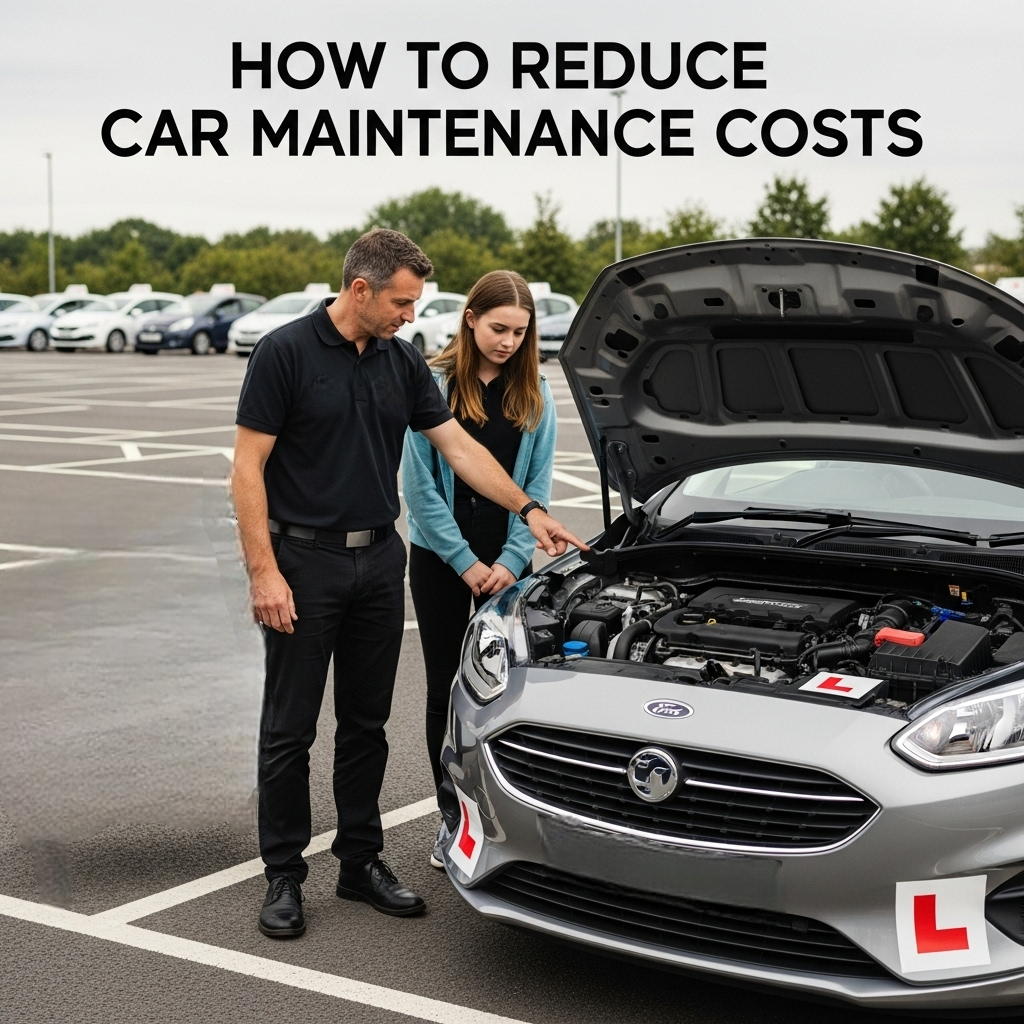
For many drivers, the ongoing cost of car maintenance can feel like a financial black hole. While services and repairs are non-negotiable for safety and reliability, there are intelligent, proactive strategies to reduce car maintenance costs significantly. This isn’t about skipping essential work; it’s about adopting habits and knowledge that prevent unnecessary wear, catch issues early, and make you a more informed vehicle owner. Whether you’re a new learner from a driving school in Ilford or an experienced driver who once searched for the cheapest driving instructor near me, applying these principles will help you keep more money in your pocket while ensuring your car remains safe and roadworthy.
Part 1: The Foundation: Driving Habits That Save You Money
How you drive has the single biggest impact on your car’s long-term health. A good driving school instills these cost-saving habits from the start.
- Smooth Operation: Harsh acceleration and late, aggressive braking wear out tyres, brakes, and engine components much faster. Aim for progressive, gentle inputs.
- Engine Warm-Up: Avoid high engine speeds (revs) from a cold start. Drive gently for the first 5-10 minutes to allow oil to circulate and reach operating temperature.
- Anticipate the Road: Look ahead and plan your movements. Lifting off the accelerator early to coast to a stop uses less fuel and saves your brakes.
- Moderate Speeds: Consistently driving at very high speeds increases fuel consumption and puts greater stress on the engine, tyres, and brakes.
Part 2: Proactive & Preventative Maintenance
The “pay a little now, save a lot later” philosophy is the cornerstone of reducing costs.
- Follow Service Schedules: Adhere to your car’s service intervals. Changing oil and filters on time prevents sludge buildup and engine wear, avoiding catastrophic failures.
- Regular Fluid Checks: Weekly checks of engine oil, coolant, and washer fluid (as detailed in basic maintenance guides) can alert you to leaks or consumption issues before they cause damage.
- Tyre Care: Maintain correct tyre pressures (check monthly). Under-inflated tyres wear unevenly, reduce fuel economy, and can overheat. Rotate tyres as recommended to ensure even wear.
- Listen and Feel: Pay attention to new noises, vibrations, or changes in handling. Addressing a small issue like a worn brake pad is far cheaper than replacing ruined discs and calipers later.
Part 3: Becoming a Savvy Owner: Knowledge is Power
- Understand What’s Needed: When a garage recommends work, ask them to show you the issue (e.g., a worn component) and explain why it needs doing. This helps you distinguish critical repairs from “nice-to-haves.”
- Get Multiple Quotes: For non-urgent, significant work, get quotes from 2-3 reputable garages (including independent specialists for your car brand).
- Consider Independent Garages: Often, a trusted local independent garage can offer lower labour rates than a main dealer for the same quality parts and service.
- Keep Good Records: A full, stamped service history not only helps with diagnostics but also significantly boosts your car’s resale value.
Part 4: Simple DIY Tasks You Can Safely Master
Tackling these yourself can save on labour costs. Start with:
- Replacing Wiper Blades: A simple 5-minute task that avoids a garage call-out.
- Replacing Air Filters: The cabin air filter and engine air filter are often easily accessible and simple to swap.
- Changing a Bulb: Consult your manual. Many exterior bulbs are designed for owner replacement.
- Topping Up Fluids: Regularly topping up screenwash, coolant (when cold), and engine oil (with the correct grade) is simple and essential.
Safety First: Never attempt work beyond your skill level, especially involving brakes, steering, or critical safety systems.
Part 5: Strategic Buying & Planning
- Shop for Tyres Smartly: Compare prices online. Consider reputable mid-range brands which often offer 90% of the performance of premium tyres at a lower cost.
- Buy Parts Online (For Garage Fitting): For planned work, you can sometimes source quality parts (e.g., brakes, filters) online at a lower cost and pay a garage just for labour. Always agree this with the garage first.
- Plan for Big Expenses: Use your MOT advisory sheet as a forecast. If it notes “brakes close to limit,” start budgeting for that repair in the coming months.
Part 6: The Learning Link: How Good Training Saves Money Long-Term
This connects directly to your journey as a driver. The foundation laid in your first 5 hours of driving lessons is crucial. An instructor from a quality driving school doesn’t just teach you to pass a test; they teach you the smooth, anticipatory driving style that inherently reduces wear and tear. Understanding vehicle control and mechanics from the start makes you more attuned to your car’s condition, helping you identify issues early. Investing in thorough training is, ironically, one of the first and best ways to reduce car maintenance costs over your driving lifetime.
Conclusion: An Ongoing Mindset
Reducing maintenance costs is not a one-time action but a continuous mindset. It combines gentle driving, vigilant ownership, basic DIY skills, and smart consumer choices. By embracing this approach, you transform from a passive car user into an informed owner, achieving greater reliability and financial control.
Ready to learn the safe, smooth driving style that saves money from day one?
📞 Call Driving Academy Ltd at 07399 696344 – We teach the techniques that protect your car and your wallet. Based in Whitechapel, serving Ilford and London.
📧 Email: drivingacademyltd@gmail.com
📍 Visit Us: 101 Whitechapel High Street, London, E1 7RA
Invest in skills that pay you back. Book your first lesson today.