


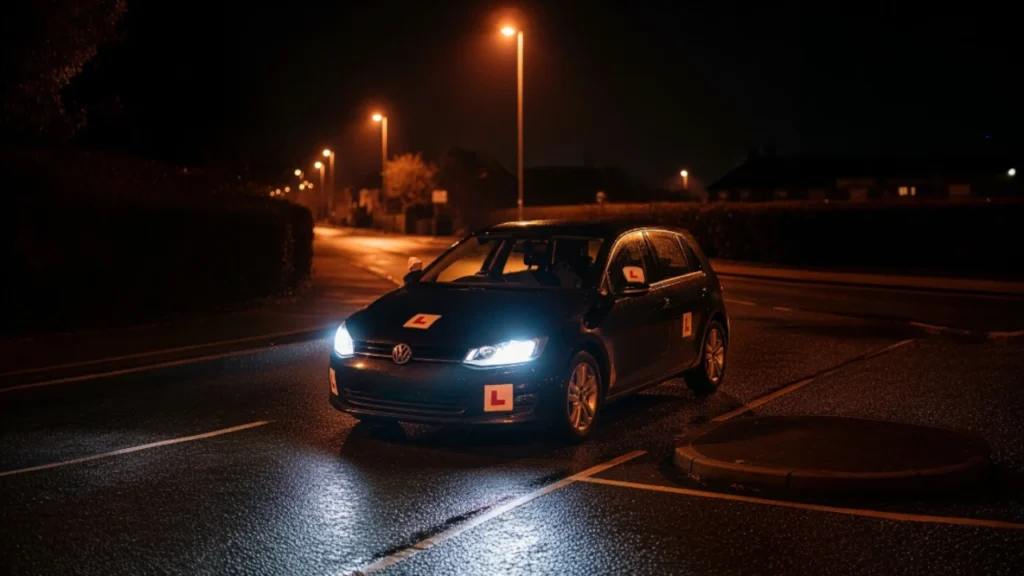
Driving at night transforms familiar roads into a landscape of shadows and sudden lights. For new drivers, it can feel intimidating, but mastering safe night driving is a non-negotiable skill for safety and test success. This isn’t just about passing your UK Driving Theory Test—it’s about gaining the real-world confidence to handle any condition and pass your driving test quickly in the UK by being comprehensively prepared.
This guide is your roadmap. We’ll cover everything from essential pre-drive checks to advanced on-road techniques, directly connecting these skills to your test success. For expert, structured tuition in East London that includes vital night practice, contact Driving Academy Ltd at 📞 07399 696344, email 📧 drivingacademyltd@gmail.com, or visit us at 📍 101 Whitechapel High Street, London, E1 7RA.
Why Night Driving is a Critical Skill to Master
Understanding the unique challenges of night driving is the first step to conquering them:
- Severely Limited Visibility: Headlights illuminate only 150-500 feet ahead, drastically reducing your time to react to hazards like pedestrians or debris.
- Dangerous Glare: Contrast between darkness and bright lights from traffic or signs causes eye strain and temporary blindness.
- Increased Fatigue Risk: Driving when your body expects sleep impairs reaction time and judgment as much as alcohol.
- Higher Risk Encounters: You’re more likely to share the road with tired or impaired drivers during late hours.
Mastering these conditions doesn’t just make you safer—it makes you a more competent, test-ready driver.
Your Essential Pre-Drive Night Safety Checklist
Safety begins before you turn the key. Make this routine non-negotiable.
Prepare Your Vehicle
- Clean All Windows & Mirrors: A dirty windshield scatters light, multiplying glare. Clean inside and out.
- Check Every Light: Ensure headlights (dipped/full beam), brake lights, indicators, and sidelights work perfectly. A single failed bulb is a major hazard and a test fail.
- Verify Headlight Alignment: Misaligned beams blind others or poorly light your path. Have them checked professionally if unsure.
- Top Up Screen Wash: Use a quality fluid to maintain a clear view in all conditions.
Prepare Yourself
- Get Your Eyes Checked: Address glare sensitivity with an eye test. Anti-reflective lens coatings can help significantly.
- Prioritise Rest: Never drive tired. Drowsiness is a leading cause of night-time accidents.
Mastering On-the-Road Night Techniques
When driving, these techniques are your toolkit for safety.
Intelligent Light Use
Correct lighting is crucial for safety and is thoroughly tested in your UK Driving Theory Test.
| Driving Situation | Correct Lights to Use | Key Rule & Reason |
|---|---|---|
| Lit urban streets | Dipped headlights | Your default for seeing and being seen without dazzling others. |
| Dark country roads | Full beam headlights | Use to see further (up to 500ft). MUST dip for oncoming traffic or when following a vehicle. |
| Following another car | Dipped headlights | Prevents your beam from reflecting in their mirrors and blinding them. |
| Poor daytime visibility | Dipped headlights | A legal requirement in rain, mist, or fog so others can see you. |
| Parked on a road >30mph | Parking lights | Legally required to make your stationary vehicle visible at night. |
Adapt Your Driving Style
- Reduce Your Speed: Your stopping distance exceeds your sight distance at night. Slowing down is the most effective safety action.
- Increase Following Distance: At least double the two-second rule. This critical space allows for sudden stops.
- Combat Glare Effectively: Avoid staring at oncoming lights. Glance down and slightly left, using the kerb or lane markings to stay on course.
- Heighten Your Awareness: Actively scan for poorly visible hazards like pedestrians in dark clothing, cyclists, and wildlife.
How Night Driving Practice Accelerates Your Path to a Pass
Integrating night lessons is a strategic move for anyone wanting to pass your driving test quickly in the UK. Here’s why:
- Demonstrates Advanced Competence: Confident night driving shows examiners you’ve moved beyond basic skills, showcasing maturity and all-weather readiness.
- Unlocks More Test Slots: Being comfortable in low light means you can confidently accept early morning or late afternoon winter test slots, potentially getting a test date sooner.
- Sharpens Core Test Skills: Navigating at night forces perfect use of mirrors, smooth steering, and precise speed control—all key marking criteria.
- Builds Unshakeable Confidence: Overcoming the challenge of night driving reduces overall test anxiety, making you calmer and more focused on the day.
Common Night Driving Errors & How to Correct Them
| Mistake | The Risk | The Smart Fix |
|---|---|---|
| Overdriving Your Headlights | Driving too fast to stop within the lit area. | Match your speed to your sight distance. If you can’t stop within the illuminated section, you’re going too fast. |
| Late or Forgotten Dipping | Blinding other drivers, causing danger. | Dip beams proactively the moment you see an approaching car’s lights or catch up to traffic. |
| Ignoring Fatigue | Dramatically increased crash risk from micro-sleeps. | Listen to your body. If sleepy, the only safe action is to stop, rest, and continue when alert. |
| Incorrect Fog Light Use | Blinding drivers behind with rear fog lights in clear conditions. | Use only when visibility falls below 100 metres. Switch off immediately when it improves. |
FAQs: Your Night Driving Questions Answered
Q1: When should I start night driving practice?
A: Only after mastering daytime basics. A good driving school instructor will introduce night lessons at the right time, ensuring you build skills safely and progressively.
Q2: Are there specific night questions in the theory test?
A: Absolutely. The UK Driving Theory Test includes multiple questions on lighting rules, stopping distances in the dark, and dealing with glare—topics covered thoroughly in this guide.
Q3: What if an oncoming driver doesn’t dip their blinding high beams?
A: Stay calm. Do not retaliate. Slow down, focus on the left edge of your lane to maintain position, and allow the vehicle to pass.
Q4: How can a driving school in Ilford help me practice safely?
A: Local schools like Driving Academy Ltd offer structured evening lessons. Instructors use dual-control cars and know Ilford’s roads, providing safe, targeted practice on relevant test routes and complex junctions.
Q5: Can night practice really help me pass faster?
A: Yes. By becoming a more rounded driver, you often reach test standard in fewer total hours. Confidence in all conditions means you are truly ready sooner, reducing the need for last-minute cramming or multiple test attempts.
Q6: Is it worth taking a later driving test slot?
A: If you are confident and well-practiced at night, a late afternoon test in winter can work to your advantage. Discuss the best time for your skills with your instructor.
Conclusion: Drive with Confidence, Day or Night
Mastering safe night driving is the mark of a competent, responsible driver. By methodically applying the checks, techniques, and rules outlined here, you transform night driving from a source of anxiety into a normal part of your driving skill set.
The fastest and safest way to build this skill is with professional guidance. A reputable driving school provides the structured environment and expert feedback essential for rapid progress. For learners in East London, Driving Academy Ltd is committed to providing this comprehensive training, helping you not only pass your test but become a safe driver for life.
Ready to master driving in every light? Start your journey today.
📞 07399 696344 | 📧 drivingacademyltd@gmail.com | 📍 101 Whitechapel High Street, London, E1 7RA