


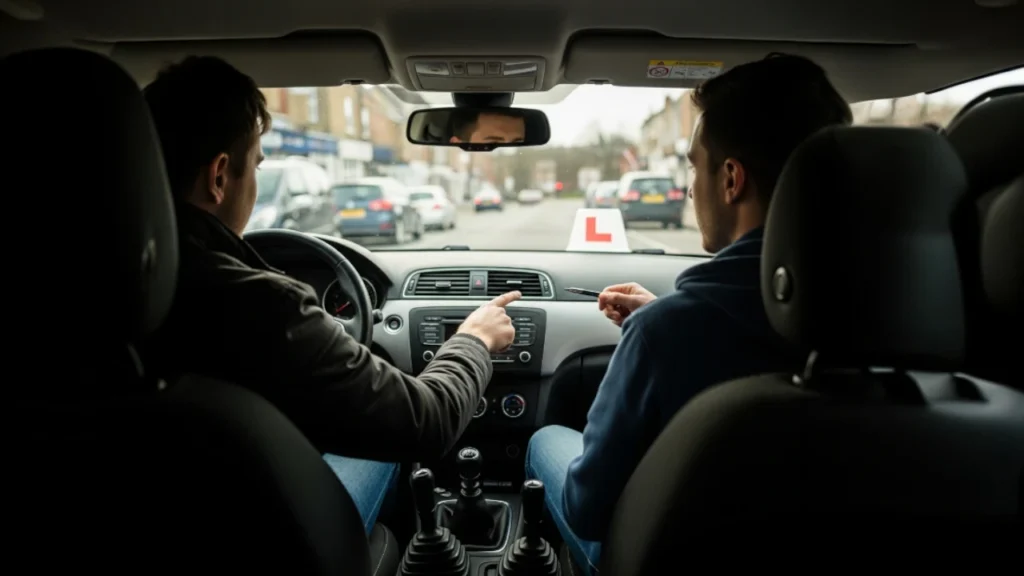
The driving test is one of the most nerve-wracking experiences for any learner. Your heart races, your palms sweat, and suddenly every junction looks terrifying. But here’s the truth: nerves are completely normal. In fact, a little bit of nervous energy can sharpen your focus. The problem comes when anxiety takes over and affects your driving.
This guide is designed to help you understand why test nerves happen and, more importantly, how to stay calm, focused, and in control on your big day. Whether you’re learning with a driving school in Ilford or have found the cheapest driving instructor near me, these techniques will help you perform at your best when it matters most. Think of this as the final piece of your preparation puzzle, alongside all the practical skills you’ve learned and the tips to pass your driving test you’ve already mastered.
Part 1: Understanding Test Nerves – Why They Happen
The Science of Nerves
When you’re anxious, your body releases adrenaline – the “fight or flight” hormone. This causes:
- Increased heart rate
- Faster breathing
- Sweaty palms
- “Tunnel vision” (difficulty seeing peripherally)
- Difficulty concentrating
These reactions were designed to help our ancestors escape predators – not to help with parallel parking! The good news is that you can learn to manage them.
Common Triggers for Test Nerves
| Trigger | Why It Happens |
|---|---|
| Fear of failure | The test feels like a “pass or fail” judgment on you |
| Fear of the unknown | Not knowing what to expect |
| Examiner presence | Feeling judged by a stranger |
| Pressure from others | Family, friends, or own expectations |
| Past experiences | Previous test failures or bad lessons |
Part 2: Preparation – The Best Antidote to Nerves
1. Be Genuinely Test-Ready
The single biggest cause of test nerves is not feeling prepared. If you know, deep down, that you’re not quite ready, your anxiety will be worse.
How to know you’re ready:
- You consistently pass mock tests with your instructor
- You’ve practised all manoeuvres until they feel automatic
- You can handle different road types and traffic conditions
- Your instructor says you’re ready
2. Know the Test Routes
Your instructor should have taken you on the local test routes. Familiarity breeds confidence. When you recognise a junction or roundabout, your brain relaxes slightly.
3. Do Multiple Mock Tests
Mock tests with your instructor simulate the real thing. They help you:
- Experience the pressure in a safe environment
- Learn to recover from mistakes
- Build confidence in your abilities
4. Prepare Logistically
Remove last-minute stress by being organised:
The night before:
- ✅ Check you have your provisional licence
- ✅ Charge your phone (for maps/contact)
- ✅ Lay out comfortable clothes (nothing too tight)
- ✅ Set two alarms (just in case!)
- ✅ Eat a light meal – not too heavy, not too light
On the day:
- ✅ Arrive 10-15 minutes early – not too early to sit and worry
- ✅ Use the loo before you start (nerves affect everyone!)
- ✅ Turn your phone off or on silent
Part 3: On the Day – Calming Techniques
1. Breathing Exercises
When you’re anxious, your breathing becomes shallow. Deep breathing triggers your body’s relaxation response.
The 4-7-8 Technique:
- Breathe in through your nose for 4 seconds
- Hold your breath for 7 seconds
- Breathe out slowly through your mouth for 8 seconds
Repeat this 3-5 times while waiting for your test.
2. Positive Self-Talk
Your inner voice matters. Replace negative thoughts with positive ones:
| Negative Thought | Replace With |
|---|---|
| “I’m going to fail” | “I’ve prepared for this” |
| “The examiner is judging me” | “The examiner wants me to pass” |
| “I can’t do this” | “I’ve done this before in lessons” |
| “What if I make a mistake?” | “Mistakes happen – I’ll recover” |
3. The “Borrowed Confidence” Trick
Think of someone who believes in you – your instructor, a parent, or a friend. Imagine they’re sitting in the back seat cheering you on. Their confidence can become yours.
4. Physical Grounding
If you feel panicky, use the 5-4-3-2-1 technique:
- 5 things you can SEE
- 4 things you can TOUCH (the steering wheel, gear stick)
- 3 things you can HEAR (the engine, traffic)
- 2 things you can SMELL (the car, fresh air)
- 1 thing you can TASTE (take a sip of water)
This grounds you in the present moment.
Part 4: During the Test – Staying Focused
1. Treat the Examiner Like a Sat Nav
Remember: the examiner is just giving directions. They’re not judging you as a person – they’re checking that you can drive safely. Think of them as a talking sat nav.
2. Talk to Yourself (Quietly!)
Many drivers talk themselves through manoeuvres:
- “Mirror, signal, manoeuvre”
- “Check right, check left, clear”
- “Slow and steady on the clutch”
This keeps your brain focused on the task, not on worrying.
3. Don’t Dwell on Mistakes
If you make a minor mistake (like a slightly jerky gear change), let it go. The examiner is looking for overall safe driving, not perfection. Dwelling on one error can cause more.
4. Use the Manoeuvre Time to Reset
Manoeuvres (parallel park, bay park, pull up on the right) are your chance to slow down and reset. You have time. Take a breath before you start. Go slowly. Use all your observations.
5. If You Feel Panic Rising
- Breathe deeply (even while driving)
- Sit back in your seat – tension makes you grip the wheel
- Drop your shoulders – we hold stress in our shoulders
- Focus on the road ahead – not on your thoughts
Part 5: What if You Fail?
This is the biggest fear for many learners. Let’s reframe it:
Failing Is Not the End
- Most people don’t pass first time. The pass rate for first-timers is around 47% . You’re in good company.
- You get immediate feedback. The examiner tells you exactly what went wrong – that’s free, personalised advice.
- You can retake. You only have to wait 10 working days .
The “Learning Opportunity” Mindset
Think of the test as a learning opportunity, not a life-or-death judgment. If you pass, brilliant. If you don’t, you learn exactly what to improve. Either way, you become a better driver.
Part 6: How Your Driving School Can Help
A quality driving school in Ilford like Driving Academy Ltd does more than teach you to drive. We prepare you mentally for test day.
Our approach includes:
- Mock tests that simulate real conditions
- Test route practice so you know what to expect
- Nerve management techniques tailored to you
- Positive reinforcement to build confidence
- Honest feedback so you’re never surprised on test day
This is why choosing a professional school over simply the cheapest driving instructor near me matters. The right instructor invests in your confidence, not just your skills.
Part 7: Quick Reference – Test Day Checklist
| Before the Test | During the Test | After the Test |
|---|---|---|
| Get good sleep | Breathe deeply | Accept the result |
| Eat lightly | Talk yourself through it | Celebrate progress |
| Arrive 10-15 mins early | Don’t dwell on mistakes | Book retest if needed |
| Use the loo | Use manoeuvres to reset | Learn from feedback |
| Do breathing exercises | Stay focused on road | Keep driving! |
Part 8: Real Stories from Real Passers
“I failed my first test – I was a nervous wreck. Second time, I practised the breathing techniques and talked to myself the whole way. I passed with just 3 minors!” – Sarah, Ilford
“My instructor told me to imagine the examiner was my grandad. It sounds silly, but it worked. I stopped worrying and just drove.” – James, London
“I was shaking before my test. My instructor said ‘remember, you’ve done this a hundred times.’ And I had. That gave me confidence.” – Priya, Whitechapel
Part 9: The Link Between Staying Calm and Passing
Staying calm isn’t just about feeling better – it directly affects your chances of passing. When you’re calm:
- Your observation is better (no tunnel vision)
- Your decision-making is sharper
- Your control is smoother
- You recover from minor mistakes more easily
That’s why the tips to pass your driving test always include managing nerves. A calm driver is a safe driver – and safe drivers pass.
Conclusion: You’ve Got This
The driving test is just 40 minutes of your life. Yes, it matters. But it doesn’t define you. You’ve spent months learning to drive safely. You’ve practised manoeuvres until they’re automatic. You’ve driven in all conditions with your instructor.
Now it’s time to show the examiner what you can do. Trust your training. Breathe. Stay focused. And remember – every qualified driver on the road today passed their test. So will you.
Ready to prepare properly with instructors who care about your confidence?
📞 Call Driving Academy Ltd at 07399 696344 – Our patient, experienced instructors in Ilford and London specialise in helping nervous learners build confidence and pass their tests.
📧 Email: drivingacademyltd@gmail.com
📍 Visit Us: 101 Whitechapel High Street, London, E1 7RA
Your test day success starts here. Book your lessons today.