


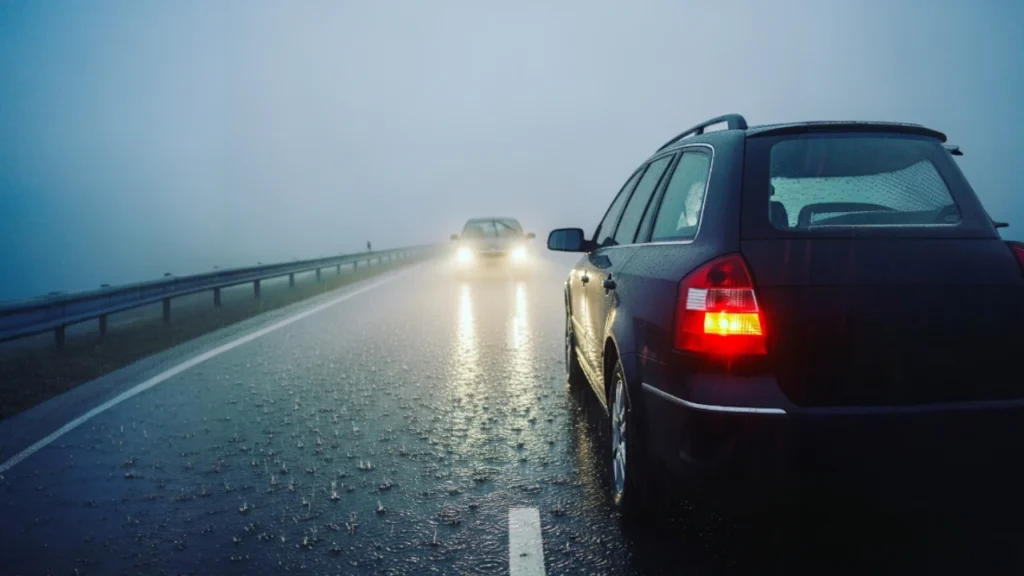
Driving in the rain is one of the most common yet challenging conditions faced by UK motorists. What seems like a routine journey can quickly become hazardous, with reduced visibility, slippery roads, and longer stopping distances. Learning to drive safely in rain is not just a test requirement—it’s an essential life skill for every driver. This guide combines crucial wet-weather techniques with the basic car maintenance tips for beginners that keep you safe, alongside the foundational UK seatbelt and car safety rules you must know.
For comprehensive training that prepares you for all conditions, contact Driving Academy Ltd at 📞 07399 696344, email 📧 drivingacademyltd@gmail.com, or visit 📍 101 Whitechapel High Street, London, E1 7RA.
Why Rain Makes Driving Dangerous: Understanding the Risks
Before we get to the tips, it’s vital to understand why rain is so risky. It creates a perfect storm of hazards:
- Reduced Traction: Water creates a barrier between your tyres and the road, significantly reducing grip. This affects braking, steering, and acceleration.
- Poor Visibility: Rain on the windscreen, spray from other vehicles, and fogged-up windows drastically cut down what you can see.
- Longer Stopping Distances: It can take at least double the distance to stop on a wet road compared to a dry one.
- Increased Risk of Aquaplaning: When your tyres lose contact with the road entirely and skim on a layer of water, you have zero control.
Mastering these conditions is a key part of your learning with any reputable driving school and will be examined in both your UK Driving Theory Test and practical assessment.
Your Pre-Drive Checklist: Maintenance & Preparation for Rain
Safety in the rain starts long before you turn the ignition. A well-maintained car is your first line of defence.
Basic Car Maintenance Tips for Wet Weather
These checks are simple but non-negotiable for beginner drivers and veterans alike.
| Car Part | Why It’s Critical in Rain | How to Check & Maintain It |
|---|---|---|
| Tyres | Worn tyres cannot disperse water, leading to aquaplaning. They are your only contact with the road. | Weekly Check: Ensure tread depth is well above the legal minimum of 1.6mm. 3mm is safer for wet weather. Check pressure is correct. |
| Windscreen Wipers | Streaky or juddering wipers severely reduce visibility. | Monthly Check: Look for cracks or splits in the rubber. Replace blades at least once a year. Top up washer fluid with a good screen wash. |
| Lights | So other drivers can see you in gloomy, low-visibility conditions. | Weekly Check: Ensure all lights work: headlights (dipped beam), fog lights, brake lights, and indicators. |
| Brakes | Brakes work harder in the wet and may be less effective. | Listen & Feel: If brakes feel spongy, pull to one side, or make grinding noises, have them checked by a professional immediately. |
Remember: A key part of UK seatbelt and car safety rules is ensuring your vehicle is roadworthy. Driving with illegal tyres or faulty lights is an offence, regardless of the weather.
Essential Techniques to Drive Safely in Rain
Once you’re on the road, adapt your driving with these proven methods.
1. Slow Down and Increase Following Distance
This is the single most important rule. Your stopping distance is at least doubled.
- Speed: Reduce your speed significantly below the limit to account for less grip.
- Space: At least double the two-second rule to a four-second gap from the car in front. This gives you vital time to react if they brake suddenly.
2. Use Your Lights Correctly
You MUST use your headlights when visibility is seriously reduced. If you need to use your windscreen wipers continuously, it’s a good indication that you should also turn on your dipped headlights so others can see you. Never rely on sidelights alone. Use front and rear fog lights only when visibility drops below 100 metres, and remember to switch them off when it improves.
3. Smooth is Safe
Avoid sudden movements that can break your tyres’ grip.
- Steer, Brake, and Accelerate Gently: Jerky inputs can lead to skids. Imagine there’s a cup of hot coffee on your dashboard that you don’t want to spill.
- Avoid Cruise Control: You need to be in full, sensitive control of your speed in slippery conditions.
4. Dealing with Aquaplaning
If the steering feels suddenly light and the engine note rises, you may be aquaplaning.
- DON’T panic and don’t brake sharply.
- DO ease off the accelerator gently and hold the steering wheel straight until you feel the tyres regain contact with the road.
5. Demist Like a Pro
A fogged-up windscreen is a major hazard. Use your air conditioning alongside your heater. The AC dehumidifies the air, clearing the screen far faster than heat alone. Direct the airflow to the windscreen and side windows.
How Professional Lessons Prepare You for Rain
This is where a good driving school in Ilford proves its worth. Professional instructors don’t just teach you to pass a test in fair weather.
- Guided Experience: They will take you out in light rain to practice these techniques in a safe, controlled environment with dual controls.
- Test Preparation: Examiners expect you to drive appropriately for the conditions. Showing you can adjust your driving for rain demonstrates maturity and skill.
- Local Knowledge: Instructors know which local roads are prone to flooding or poor drainage in Ilford and will ensure you know how to handle them.
FAQs: Driving in the Rain
Q1: Is it illegal to drive with worn windscreen wipers in the rain?
A: While not a specific offence, driving with impaired vision could lead to a charge of “driving without due care and attention.” More importantly, it’s extremely dangerous.
Q2: Should I take my driving test if it’s raining?
A: Yes! If you cancel because of rain, you’ll lose your fee. A good driving school will have prepared you for this. Examiners expect you to adapt, and driving well in the rain can actually demonstrate your competence.
Q3: How do I find puddles that might cause aquaplaning?
A: Look ahead for patches of standing water or where water is gathering in tyre tracks. Slow down before you reach them if it’s safe to do so.
Q4: Are the rules about lights in rain in the theory test?
A: Absolutely. Your UK Driving Theory Test will include questions on when to use headlights and fog lights in reduced visibility, including rain and spray.
Q5: What’s the most common mistake learners make in the rain?
A: Driving too fast for the conditions and following too closely. It takes experience to internalise just how much longer it takes to stop.
Q6: Can a driving school refuse to teach in the rain?
A: A professional school should not. Driving in various conditions is part of the curriculum. However, lessons may be postponed in cases of extreme weather (e.g., severe flooding, storms) for safety.
Conclusion: Confidence Comes from Preparation
Driving safely in rain is about a combination of preparation (through basic car maintenance) and technique (smooth, slow, and deliberate driving). By treating wet weather with the respect it demands, you protect yourself, your passengers, and other road users.
Building this confidence is best done with expert guidance. At Driving Academy Ltd, we ensure our learners are prepared for sunshine, showers, and everything in between, equipping you not just for a test, but for a lifetime of safe driving.
Don’t let the weather dampen your confidence. Book a lesson and learn to drive safely in all conditions.
📞 07399 696344 | 📧 drivingacademyltd@gmail.com | 📍 101 Whitechapel High Street, London, E1 7RA