

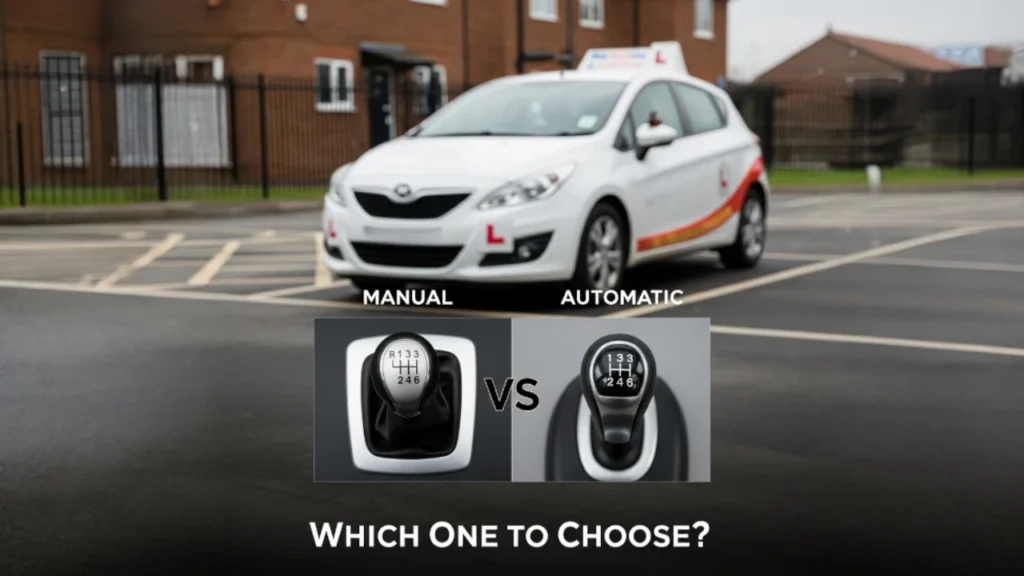
Choosing between a manual or automatic driving licence is one of the biggest decisions you’ll make when learning to drive in the UK. This choice affects your learning experience, test costs, career opportunities, and the cars you can drive for life. As we look toward UK Driving Theory Test requirements for 2026 and beyond, making an informed choice is more important than ever. This comprehensive guide breaks down everything you need to know about manual vs automatic licence options, connecting this crucial decision to UK seatbelt and car safety rules, finding the right driving school in Ilford, and preparing for future driving tests.
For expert guidance on choosing the right transmission for your needs, contact Driving Academy Ltd at 📞 07399 696344, email 📧 drivingacademyltd@gmail.com, or visit 📍 101 Whitechapel High Street, London, E1 7RA.
The Fundamental Difference: What Your Licence Allows
| Licence Type | What You Can Drive | Test Vehicle Requirement |
|---|---|---|
| Manual Licence | Manual AND automatic vehicles | Manual car |
| Automatic Licence | Automatic vehicles ONLY | Automatic car |
This single distinction creates all the downstream differences in learning, cost, and flexibility.
Manual Licence: The Traditional Choice
Advantages of Choosing Manual
- Full Driving Privileges: Drive any car – manual or automatic
- Career Opportunities: Many jobs (delivery, trades, emergency services) require manual licences
- Rental Flexibility: More rental car options, especially internationally
- Potential Cost Savings: Manual cars are generally cheaper to buy and maintain
- Transferable Skills: Understanding gears helps with other vehicles (motorcycles, HGVs)
Challenges of Learning Manual
- Steeper Learning Curve: Mastering clutch control and gear changes takes time
- More Test Failures: Statistics show higher failure rates for manual tests
- Urban Driving Stress: Constant gear changes in traffic can be tiring
- Longer Learning Time: Typically requires more lessons to reach test standard
Automatic Licence: The Modern Alternative
Advantages of Choosing Automatic
- Easier to Learn: No clutch or gears to manage = simpler focus on road skills
- Faster Progress: Many learners reach test standard in fewer hours
- Lower Stress: Particularly beneficial for anxious learners or those with coordination challenges
- Future-Proof: With electric vehicles (all automatic) becoming standard, this is increasingly relevant
- Urban Advantage: Stop-start traffic is much less demanding
Limitations of Automatic Only
- Restricted Licence: Cannot legally drive manual cars without retesting
- Career Limitations: Some employment opportunities may be closed
- Rental Restrictions: Fewer options, often at higher rates
- Vehicle Costs: Automatic cars generally cost more to purchase
Key Decision Factors: What’s Right For You?
Consider these questions before choosing:
Your Personal Circumstances
- Learning Anxiety: If you’re very nervous, automatic reduces cognitive load
- Physical Considerations: Some disabilities make automatic the only practical choice
- Time Constraints: Need to pass quickly? Automatic typically requires fewer lessons
- Budget: Consider both lesson costs and long-term vehicle expenses
Your Future Needs
- Career Plans: Will you need to drive for work?
- Family Considerations: Will you need to share cars with manual drivers?
- Vehicle Preferences: Do you see yourself driving older/classic cars (mostly manual) or newer/electric vehicles (mostly automatic)?
Cost Comparison: Manual vs Automatic
| Cost Factor | Manual | Automatic |
|---|---|---|
| Average Lesson Cost (Ilford) | £28-£34/hour | £30-£38/hour |
| Typical Lessons to Test | 40-50 hours | 30-40 hours |
| Test Pass Rate | Approximately 46% | Approximately 54% |
| Vehicle Purchase | Generally cheaper | Generally more expensive |
| Long-Term Flexibility | Maximum options | Limited to automatics |
The 2026 Perspective: Future-Proofing Your Choice
As we approach 2026 and the evolving UK Driving Theory Test landscape, several trends make automatic increasingly attractive:
- Electric Vehicle Revolution: All electric vehicles are automatic. By 2035, all new cars sold in the UK must be zero-emission
- Advanced Driver Assistance: Modern automatics often include safety features that complement UK seatbelt and car safety rules
- Urban Planning: With more 20mph zones and congestion, automatic’s stop-start advantage grows
- Test Evolution: Future tests may place more emphasis on hazard perception than gear management
However, manual remains crucial if you:
- Plan to drive for employment
- Want maximum vehicle choice flexibility
- Enjoy the engagement of traditional driving
- May need to drive older or specialized vehicles
How Your Driving School in Ilford Can Help You Decide
A reputable driving school in Ilford won’t push you toward one option. Instead, they should:
- Assess Your Natural Aptitude: Some students instinctively handle gears well
- Discuss Your Long-Term Goals: Career, family, and lifestyle considerations
- Offer Trial Lessons: Many schools provide introductory lessons in both transmissions
- Explain Local Relevance: Ilford’s mix of urban and suburban roads affects the decision
- Connect to Safety: Emphasize that UK seatbelt and car safety rules apply equally regardless of transmission
FAQs: Your Transmission Questions Answered
Q1: Can I switch from automatic to manual lessons later?
A: Yes, but you’ll need to take a manual test. Any automatic licence experience won’t transfer – you’ll start manual lessons from scratch.
Q2: Are automatic tests easier to pass?
A: Statistically, yes. The pass rate is approximately 8% higher, primarily because you’re managing fewer controls.
Q3: Will choosing automatic limit my theory test preparation?
A: No. The UK Driving Theory Test is identical regardless of transmission choice. Your preparation for the 2026 test requirements remains the same.
Q4: I’m learning in Ilford – does local traffic affect the choice?
A: Potentially. Ilford’s busy streets (like the A406 and A12 approaches) with frequent stops might make automatic less stressful, but a good driving school in Ilford will prepare you for either.
Q5: What if I have anxiety about driving?
A: Many learners find automatic significantly reduces anxiety by removing the fear of stalling or rolling back on hills. Discuss this openly with potential instructors.
Q6: How does this connect to seatbelt and safety rules?
A: Regardless of transmission, UK seatbelt and car safety rules apply identically. Your focus should remain on safe vehicle operation, observation, and hazard awareness – skills common to both licence types.
Making Your Decision: A Practical Approach
- Research Thoroughly: Understand the long-term implications of both choices
- Take Introductory Lessons: Try both transmissions if possible
- Consider 10-Year Vision: Where will you be in 2034? What vehicles will you need?
- Consult Professionals: Speak with multiple driving schools in Ilford for balanced advice
- Trust Your Instincts: Which option feels more aligned with your confidence and goals?
Conclusion: Your Choice, Your Future
The manual vs automatic licence decision balances immediate learning experience against lifelong driving flexibility. While automatic offers easier learning and aligns with vehicle trends, manual provides complete freedom and opportunity. Neither is inherently “better” – the right choice depends entirely on your personal circumstances, goals, and comfort.
As UK Driving Theory Test requirements evolve toward 2026, remember that safe driving principles – encapsulated in UK seatbelt and car safety rules – transcend transmission choice. Whichever path you choose, quality instruction from a professional driving school remains the key to developing skills that will serve you for decades.
Still unsure which licence type is right for you? Contact us for personalized advice and trial lesson options.
📞 07399 696344 | 📧 drivingacademyltd@gmail.com | 📍 101 Whitechapel High Street, London, E1 7RA