

When Sarah first sat in the driver’s seat of her instructor’s car, her hands were shaking. She could barely find the biting point without stalling. The thought of merging onto a roundabout made her feel sick. Like many learners, she wondered if she’d ever feel comfortable behind the wheel – let alone pass her driving test .
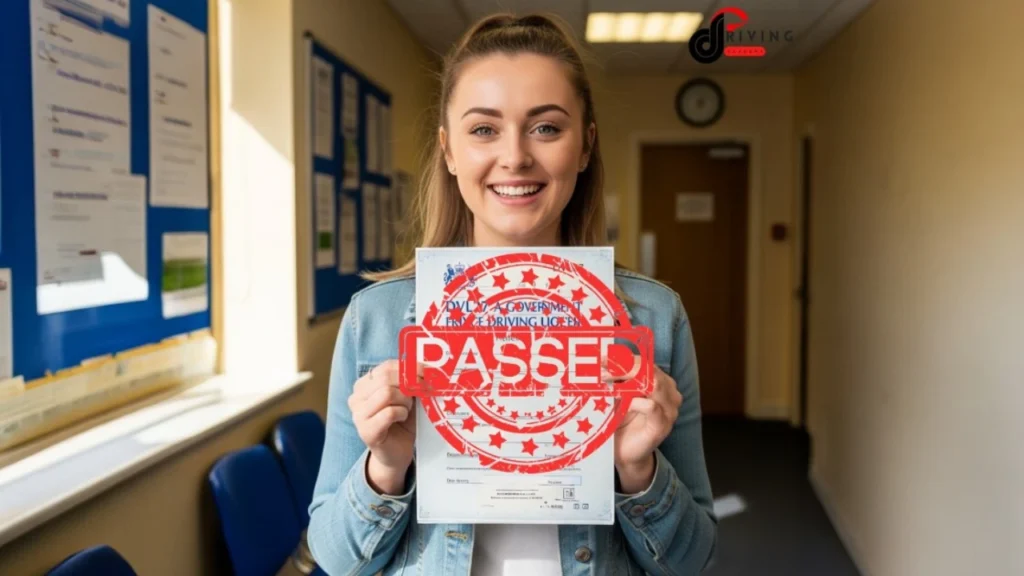
But six months later, Sarah drove out of the test centre with a pass certificate in her hand. First time. No faults.
This is her real story – from nervous beginner to confident first-time pass. Whether you’re learning with a driving school in Ilford or have found the cheapest driving instructor near me, Sarah’s journey shows that with the right mindset, preparation, and support, passing first time is achievable. And if you’re just starting out, don’t forget the essential first step – knowing how to get your provisional licence .
Part 1: The Nervous Beginning
“I Cried Before My First Lesson”
Sarah, 24, had put off learning to drive for years. “I was terrified,” she admits. “The idea of controlling a machine that could hurt someone really scared me. I kept making excuses – too busy, too expensive, I’ll do it next year.”
But when she changed jobs and her commute doubled, she knew she couldn’t put it off any longer.
The first lesson:
“I could barely look at the road. I was so focused on what my feet were doing that I forgot to check mirrors. I stalled at the first junction. I was sure my instructor was judging me.”
What helped:
“I told my instructor I was nervous. He didn’t make me feel silly – he just slowed everything down. We spent the first few lessons in a quiet industrial estate, just getting comfortable with the car. No traffic. No pressure.”
Lesson learned: A good instructor creates a safe environment. Don’t be afraid to tell them you’re nervous – they’ve seen it all before.
Part 2: Building Skills – Week by Week
From Stalling to Smooth Starts
Sarah took two lessons per week, each lasting two hours. “I wanted to build momentum. Weekly lessons meant I spent the first 20 minutes remembering what I’d learned. Two lessons a week helped everything stick.”
Week 1-2: Basics
- Cockpit drill (seat, mirrors, steering wheel)
- Moving off and stopping
- Clutch control on flat roads
Week 3-4: Junctions and roundabouts
- Turning left and right
- Emerging at T-junctions
- Small roundabouts
Week 5-6: Manoeuvres
- Parallel parking (her nemesis)
- Bay parking
- Pulling up on the right
Week 7-8: Advanced skills
- Dual carriageways
- Independent driving
- Mock tests
What helped the most:
“Private practice with my dad was a game-changer. We’d go out for an hour between lessons. I could practice what I’d learned without paying for instructor time. It built my confidence so much.”
Lesson learned: Private practice between lessons accelerates progress. If you have access to a car and a qualified supervisor, use it.
Part 3: The Theory Test Hurdle
“I Failed the First Time”
Not everything went smoothly. Sarah failed her theory test on the first attempt.
“I was devastated. I’d studied, but I panicked in the hazard perception section. I clicked too much and scored zero on two clips.”
How she bounced back:
“I took a week off to feel sorry for myself, then got back to it. I bought the official DVSA app and practiced every day. I learned the clicking strategy – one or two clicks per hazard, no spamming.”
Second attempt:
“Two months later, I passed with 49/50 on multiple choice and 65/75 on hazard perception. The relief was enormous.”
Lesson learned: Failing isn’t the end. It’s feedback. Use it to improve and try again.
Part 4: The Final Push – Test Preparation
Mock Tests and Mental Preparation
With the theory test passed, Sarah focused entirely on practical preparation.
Mock tests:
“I did three mock tests with my instructor. The first one was a disaster – I made so many mistakes. But that was the point. I learned what I needed to work on.”
Weak areas identified:
- Observation at junctions (looking properly)
- Parallel parking (rushing)
- Mirror checks (not obvious enough)
Targeted practice:
“Every lesson, we focused on my weak areas. Junction after junction. Parking after parking. My instructor was patient but firm – he wouldn’t let me move on until I got it right.”
Mindset work:
“I also worked on my nerves. My instructor taught me breathing techniques – the 4-7-8 method. I practiced visualisation, imagining myself driving calmly through the test routes.”
Lesson learned: Mock tests are essential. They reveal what you need to practice and make the real test feel familiar.
Part 5: Test Day
“I Thought I’d Failed”
The night before:
“I checked my provisional licence three times. Laid out my clothes. Set two alarms. Ate a light dinner. Tried to sleep – failed at that too!”
The morning of:
“I had porridge for breakfast – nothing heavy. Drank water but not too much. Left early with my instructor.”
At the test centre:
“The wait was the worst part. I sat in the waiting room, trying to breathe. I didn’t talk to other candidates – I knew their nerves would affect mine.”
The test begins:
“My examiner was calm and professional. The eyesight check was fine. The ‘tell me’ question was easy – I’d practiced it a hundred times.”
During the drive:
“I made a mistake at a roundabout. I hesitated for too long, and the car behind beeped. I was sure I’d failed. But my instructor had told me: ‘Don’t dwell on mistakes. Focus on the rest of the drive.’ So I took a breath and kept going.”
The independent driving section:
“I had to follow a sat nav. I went the wrong way at one point. But I remembered – going off route doesn’t count as a fault. I stayed calm and the examiner redirected me.”
The result:
“When we got back to the test centre, the examiner asked me to wait in the car. My heart was pounding. Then he said: ‘I’m pleased to tell you that you’ve passed.'”
“I burst into tears. Happy tears this time.”
Lesson learned: Don’t let one mistake ruin your test. Examiners look at the whole drive – not just one moment.
Part 6: The Aftermath – First Solo Drive
“I Cried Again – But for Different Reasons”
“The day after passing, I took my first solo drive. Just a short trip to the supermarket. No instructor. No parent. Just me and the car.”
“I was nervous, but also excited. I checked my mirrors constantly. I took it slow. And when I parked at the supermarket without any help, I cried again. I’d done it.”
Lesson learned: Passing is just the beginning. Build experience gradually. Start with familiar roads and short journeys.
Part 7: Sarah’s Top Tips for First-Time Passers
Based on her journey, Sarah shares her advice:
Before You Start
- Choose the right instructor – don’t just go for the cheapest. A good instructor makes all the difference.
- Tell them you’re nervous – they’re there to help, not judge.
- Get your provisional licence early – so you’re ready when you want to start.
During Learning
- Take lessons frequently – two per week is better than one.
- Practice privately – if you can, it’s a game-changer.
- Use the official theory test app – nothing else is as good.
- Do mock tests – they’re essential preparation.
Test Day
- Arrive 10-15 minutes early – not too early to sit and worry.
- Use the loo before – nerves affect everyone.
- Breathe – 4-7-8 technique works.
- Don’t dwell on mistakes – focus on the rest of the drive.
- Trust your training – you’ve done the work.
After Passing
- Drive regularly – skills fade without practice.
- Take a Pass Plus course – motorways, night driving, all-weather.
- Stay humble – keep learning, every drive is practice.
Part 8: What Sarah Wishes She’d Known
“I wish I’d known that everyone is nervous.”
“Before I started, I thought I was the only one who was scared. But every driver has been through it. The confident drivers on the road? They were nervous beginners once too.”
“I wish I’d started sooner.”
“I wasted years putting it off. The fear was worse than the reality. Learning to drive was hard, but it wasn’t impossible. I wish I’d started at 17 instead of 24.”
“I wish I’d known that mistakes are normal.”
“I thought every stall was a disaster. But stalling is part of learning. Even experienced drivers stall sometimes. It’s not failure – it’s practice.”
Lesson learned: Don’t let fear stop you from starting. The journey is challenging, but the destination is worth it.
Part 9: The Statistics – You Can Pass First Time
Sarah’s story is inspiring, but it’s not unique. According to DVSA data:
- Around 48.5% of learners pass their driving test first time
- With proper preparation and the right instructor, your chances improve significantly
- The average learner needs 45 hours of professional lessons plus 22 hours of private practice
Sarah’s journey wasn’t easy, but it was achievable. And so is yours.
Conclusion: Your Story Starts Here
Sarah went from crying before her first lesson to passing her driving test with zero faults. Her journey wasn’t always smooth – she failed her theory test first time, she made mistakes, she had moments of doubt. But she kept going.
Your story could be next. Every confident driver started as a nervous beginner. Every first-time pass began with a first lesson. The key is to start, to keep going, and to trust the process.
Ready to write your own success story?
📞 Call Driving Academy Ltd at 07399 696344 – Our patient, experienced instructors in Ilford and London specialise in turning nervous beginners into confident first-time passers.
📧 Email: drivingacademyltd@gmail.com
📍 Visit Us: 101 Whitechapel High Street, London, E1 7RA
Your driving journey starts here. Book your first lesson today.