


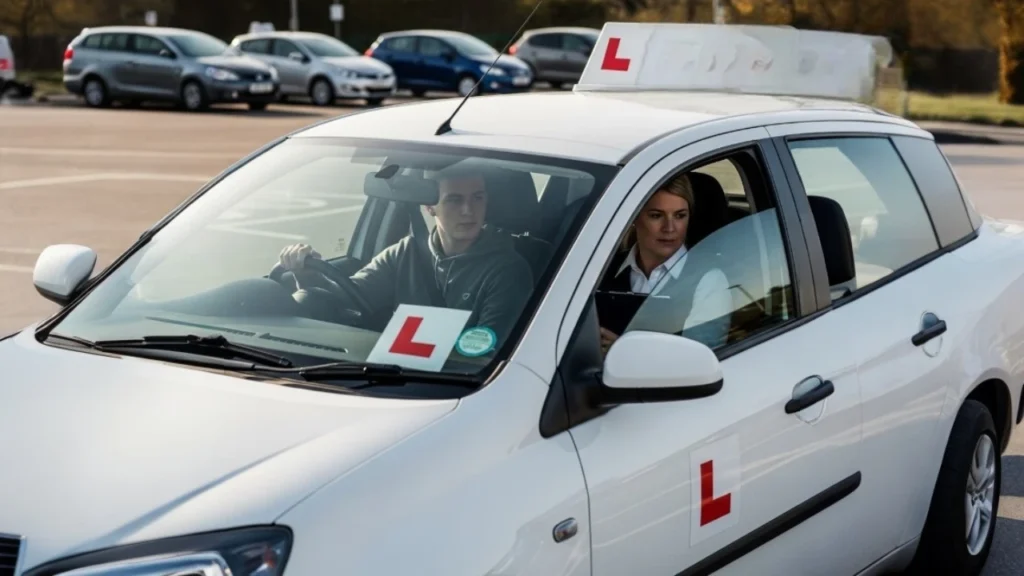
Your practical driving test is the final hurdle between you and your full licence. It’s the culmination of months of learning, practice, and determination. For many learners, the biggest source of anxiety isn’t the driving itself – it’s the fear of the unknown.
This guide walks you through every minute of your UK practical driving test – from walking into the test centre to driving away with your pass certificate. Knowing exactly what to expect will calm your nerves and help you focus on what really matters: driving safely. Whether you’re learning with a driving school in Ilford or have found the cheapest driving instructor near me, these insights will help you succeed. And before test day, make sure you’re familiar with your car’s warning lights on the dashboard – you might be asked about them!
Part 1: The Night Before Your Test
Your Evening Checklist
| Task | Why It Matters |
|---|---|
| Check your provisional licence | You cannot take the test without it |
| Lay out comfortable clothes | Avoid morning stress, wear flat shoes |
| Set TWO alarms | Never rely on just one |
| Eat a light meal | Not too heavy, not too empty |
| Avoid caffeine after 6pm | Helps you sleep better |
| Review the Show Me, Tell Me questions | Don’t drop easy marks |
| Get a good night’s sleep | Tiredness affects concentration |
What NOT to Do the Night Before
- ❌ Don’t cram – you won’t learn new skills overnight
- ❌ Don’t practice for hours – fatigue won’t help
- ❌ Don’t stay up late – sleep is more important
- ❌ Don’t discuss the test with negative people – protect your confidence
Part 2: Test Day Morning
Morning Routine
- Eat a light breakfast – porridge, toast, banana (avoid heavy or greasy foods)
- Drink water – stay hydrated, but don’t overdo it
- Use the loo – nerves affect everyone!
- Check you have your provisional licence – put it in your bag now
- Leave with plenty of time – allow for traffic and parking
What to Wear
- Comfortable clothes – nothing too tight or restrictive
- Flat shoes with thin soles – better pedal feel
- Layers – test centre temperature may vary
- No sunglasses (unless prescription) – examiners prefer to see your eyes
What to Bring
- ✅ Provisional driving licence (photocard)
- ✅ Theory test pass certificate (if not already provided)
- ✅ Glasses/contacts if you need them for driving
- ✅ Water bottle (leave in car)
- ✅ Light snack (banana is perfect – natural beta-blocker)
Part 3: Arriving at the Test Centre
Timing
Arrive 10-15 minutes early – not too early to sit and worry, but early enough to settle.
What Happens at Reception
- You’ll check in with the receptionist
- They’ll confirm your details
- You’ll wait for your examiner
The Waiting Period
While waiting:
- Don’t talk to other candidates – their nerves could affect yours
- Take deep breaths – use the 4-7-8 technique
- Avoid last-minute cramming – you know this
- Trust your preparation – you’ve done the work
Part 4: Meeting Your Examiner
First Impressions
The examiner is not your enemy. They’re a trained professional who wants you to demonstrate safe driving. The pass rate is around 48.5% – they’re not trying to fail you.
What Happens
- The examiner will introduce themselves
- They’ll ask to see your provisional licence
- They’ll explain the test format
- They’ll ask the “tell me” question before you get in the car
How to Respond
- Be polite – “Good morning/afternoon”
- Make eye contact – shows confidence
- Listen carefully – don’t interrupt
- Answer the “tell me” question calmly
Part 5: The Eyesight Check
What You’ll Be Asked
Read a number plate from 20 metres away (approximately 5 car lengths).
Tips
- If you wear glasses/contacts for driving, wear them
- If you’re unsure, ask the examiner to confirm the plate
- Take your time – there’s no rush
If You Fail
If you cannot read the number plate correctly, the test will not proceed . This is an automatic fail. Make sure you’ve had your eyes tested recently if you’re unsure.
Part 6: The Show Me, Tell Me Questions
The Two Questions
| Type | When | Example |
|---|---|---|
| Tell Me | Before driving (car stationary) | “Tell me how you’d check the brakes are working” |
| Show Me | During the drive | “Show me how you’d wash the windscreen” |
Common “Tell Me” Questions
| Question | Answer |
|---|---|
| Tell me how you’d check the brakes are working | Brakes shouldn’t feel spongy. Test at first safe opportunity |
| Tell me how you’d check the tyres have sufficient tread | Use a 20p coin – if outer band visible, tread may be below legal limit |
| Tell me where you’d find recommended tyre pressures | In manufacturer’s guide or sticker inside driver’s door frame |
| Tell me how you’d check the headlights are working | Turn on lights and walk around the car |
Tips for the “Show Me” Question
- Wait for a safe moment to demonstrate (e.g., not on a busy roundabout)
- If it’s not safe, say “I’ll do that when it’s safe”
- Don’t panic if you can’t find the control immediately
Penalties
- One wrong answer = one minor fault
- Don’t give away easy marks
Part 7: The Driving Test Itself – What Happens Minute by Minute
Test Duration
The test lasts approximately 40 minutes .
Test Structure
| Section | Duration | What It Tests |
|---|---|---|
| Eyesight check | 2 minutes | Read number plate |
| Show Me, Tell Me | 5 minutes | Vehicle safety knowledge |
| General driving | ~15 minutes | Following examiner directions |
| Independent driving | ~20 minutes | Following sat nav or traffic signs |
| Manoeuvre | 5-10 minutes | One reversing exercise |
| Emergency stop | 1/3 of tests | Only if requested |
The Independent Driving Section
About 20 minutes of your test will be spent driving independently :
- 80% of tests use sat nav
- 20% use traffic signs
Crucial: Going off route does NOT count as a fault . Only unsafe driving is marked. If you miss a turn, stay calm – the examiner will redirect you.
The Manoeuvre
You’ll be asked to complete one of the following:
- Parallel park at the side of the road
- Park in a bay – either driving in and reversing out, or reversing in and driving out
- Pull up on the right-hand side of the road, reverse for 2 car lengths, and rejoin traffic
Tips:
- Go slowly – you have time
- Check ALL around you constantly
- You can stop and readjust
- Observations are as important as accuracy
Part 8: What Examiners Are Looking For
The MSM Routine
Mirror – Signal – Manoeuvre should be automatic and obvious:
- Check mirrors before every signal
- Check mirrors before any change of speed or direction
- Make your head movements obvious – the examiner needs to SEE you checking
Observation at Junctions
This is the #1 reason people fail . Look RIGHT, LEFT, RIGHT before emerging. Make it obvious. Pause and actually process what you see.
Safe Following Distance
Maintain the 2-second rule in good conditions:
- Pick a fixed point the car ahead passes
- Count “only a fool breaks the two-second rule”
- If you pass the point before finishing, you’re too close
Increase to 4 seconds in rain, even more in ice/snow.
Smooth Control
Examiners look for:
- Smooth acceleration and braking
- Proper gear changes (not revving or labouring)
- Good clutch control
- Steering that’s controlled, not jerky
Part 9: Common Mistakes to Avoid
| Mistake | How to Avoid It |
|---|---|
| Poor observation at junctions | Look RIGHT, LEFT, RIGHT – make it obvious |
| Not checking mirrors before manoeuvres | MSM routine every time |
| Incorrect positioning on roundabouts | Know your lane before you arrive |
| Undue hesitation | Be decisive when it’s safe |
| Stalling under pressure | Practice starts until automatic |
| Not checking blind spots | Always check when moving off |
| Speeding | Know the limits, check your speedometer |
| Driving too slowly | Make progress – don’t hold up traffic unnecessarily |
Part 10: Test Day Strategies for Success
1. Exaggerate Your Observations
The examiner needs to see you checking mirrors, not just assume you are. Make your head movements obvious.
2. Verbalise If It Helps
Many successful candidates talk themselves through manoeuvres:
- “Mirror, signal, manoeuvre”
- “Check right, clear left”
- “Biting point, handbrake off, gas on”
3. Don’t Dwell on Mistakes
If you make a minor error, forget it immediately . Focus on the rest of the drive. One minor fault doesn’t mean you’ve failed.
4. Breathe
If you feel anxiety rising, take deep breaths. The 4-7-8 technique works well:
- In for 4 seconds
- Hold for 7 seconds
- Out for 8 seconds
5. The Examiner is Just a Sat Nav
Remember: the examiner is just giving directions. They’re not judging you as a person – they’re checking that you can drive safely.
6. If You Go Off Route
During independent driving, if you miss a turn or go the wrong way – don’t panic . The examiner will redirect you. Only unsafe driving is marked, not navigation errors.
Part 11: After the Test – Receiving Your Result
What Happens
- You’ll return to the test centre
- The examiner will tell you whether you passed or failed
- You’ll receive feedback on your performance
If You Pass – Congratulations! 🎉
- You’ll receive a pass certificate
- You can drive immediately (once insured)
- Your full licence should arrive within 3 weeks
- Keep your pass certificate with you until it arrives
If You Don’t Pass – It’s Not the End
- Most people don’t pass first time (47% pass rate)
- You’ll receive clear feedback on what to improve
- You can retake after 10 working days
- Every attempt makes you a better driver
The Feedback Form (DL25)
The examiner will give you a driving test report (DL25) showing:
- Driving faults (minors) – number recorded
- Serious faults – one = fail
- Dangerous faults – one = fail
Use this feedback to focus your practice for the next attempt.
Part 12: Quick Reference – Test Day Checklist
| Time | Action |
|---|---|
| Night before | Check licence, lay out clothes, set alarms |
| Morning | Eat light breakfast, use loo, leave with time |
| Arrival | 10-15 minutes early, don’t talk to other candidates |
| With examiner | Polite, eye contact, listen carefully |
| Eyesight check | Read number plate, wear glasses if needed |
| Tell Me question | Answer before driving |
| During test | Exaggerate observations, breathe, don’t dwell on mistakes |
| Show Me question | Demonstrate when safe |
| Result | Listen to feedback, pass or learn for next time |
Part 13: The 2026 Changes You Need to Know
Test Booking Changes (Spring 2026)
- Only learner drivers will be able to book their own tests
- Instructors blocked from booking on your behalf
- Maximum of 2 changes per booking (reduced from 6)
New Theory Test Content (Already in Effect)
The theory test now includes questions on CPR and defibrillators – make sure you’re up to date.
Proposed Changes (Not Yet Law)
The government is consulting on:
- Minimum learning period (3-6 months)
- Lower drink drive limits for new drivers
- Penalty points for seatbelt offences
Conclusion: You’ve Got This
You’ve prepared for this. You’ve practised manoeuvres until they’re automatic. You’ve driven in different conditions. You’ve taken mock tests. You know what examiners look for.
Your UK practical driving test is not a test of perfection – it’s a test of safe, legal driving. The examiner wants you to pass. They’re not trying to catch you out.
Trust your training. Breathe. Focus. And show them what you can do.
You’ve got this.
Ready to prepare properly for your practical test with expert guidance?
📞 Call Driving Academy Ltd at 07399 696344 – Our experienced instructors in Ilford and London will ensure you’re fully prepared for every aspect of the test.
📧 Email: drivingacademyltd@gmail.com
📍 Visit Us: 101 Whitechapel High Street, London, E1 7RA
Your test day success starts here. Book your lessons today.