


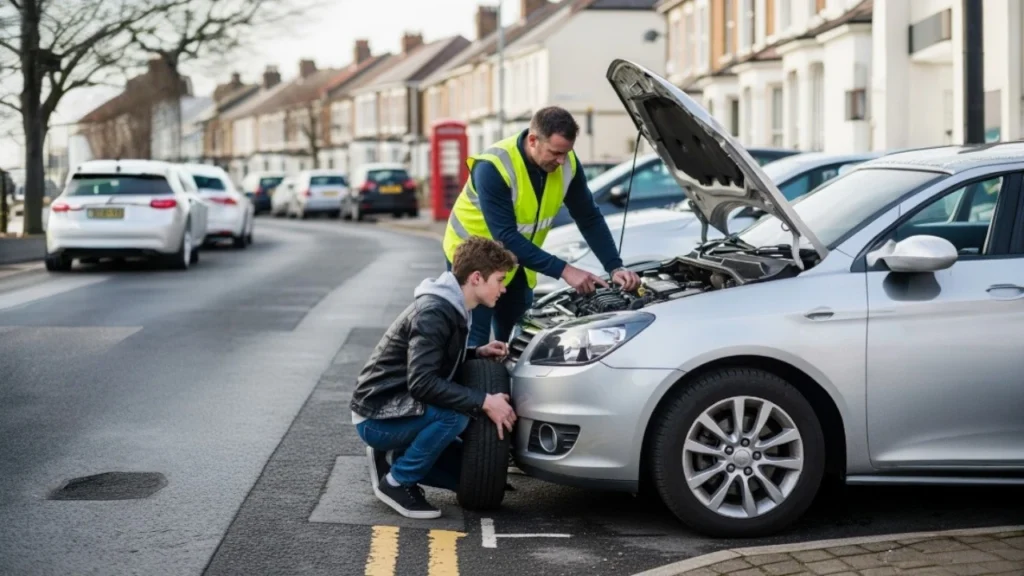
Congratulations – you’ve passed your test and you’re now a qualified driver! But here’s something they don’t always tell you: your responsibility for the car doesn’t end when you turn off the engine. Regular maintenance is essential for safety, reliability, and avoiding costly repairs.
For new drivers, the thought of checking your own car can feel intimidating. What should you look at? How do you know if something’s wrong? The good news is that a thorough weekly check takes just 10 minutes and requires no mechanical expertise. This guide covers simple weekly car checks for new drivers that will keep you safe, save you money, and help you understand your vehicle better. Whether you learned with a driving school in Ilford or found the cheapest driving instructor near me, these checks are essential for every driver – especially in your first months on the road. They’re also a great complement to understanding the new driver rules after passing the test , ensuring you’re fully prepared for independent driving .
Part 1: The Weekly 10-Minute Checklist
Here’s your quick-reference checklist. We’ll explain each item in detail below.
| Check | Time | Why It Matters |
|---|---|---|
| Tyre pressure | 2 minutes | Safety, fuel economy, tyre life |
| Tyre tread & condition | 2 minutes | Legal requirement, grip in wet conditions |
| Oil level | 1 minute | Engine protection |
| Coolant level | 1 minute | Prevents overheating |
| Screenwash | 1 minute | Clear visibility |
| Lights | 2 minutes | See and be seen |
| Warning lights | 30 seconds | Early problem detection |
| Windscreen & wipers | 30 seconds | Clear view of the road |
Part 2: Tyre Checks – Your Only Contact with the Road
Your tyres are the only part of your car that touches the tarmac. Their condition is critical for safety.
Tyre Pressure Check
Why it matters:
- Under-inflated tyres increase fuel consumption by up to 3%
- Incorrect pressure affects braking distance and cornering grip
- Uneven wear leads to premature tyre replacement
How to check:
- Find your car’s recommended pressure in the owner’s manual or inside the driver’s door frame
- Use a reliable pressure gauge (petrol stations have them, or buy your own)
- Check when tyres are cold (haven’t been driven for at least 2 hours)
- Press the gauge firmly onto the valve and read the pressure
- Add air if low, release air if over-inflated
- Don’t forget the spare tyre!
Frequency: Weekly, and before any long journey .
Tyre Tread Depth Check
The legal minimum: 1.6mm across the central three-quarters of the tyre .
How to check:
- Use a 20p coin. Insert it into the tread grooves. If you can’t see the outer band of the coin, your tread is above the legal limit
- Check across the tyre width and in several places
- Look for uneven wear (could indicate tracking issues)
Penalties for illegal tyres: £2,500 fine AND 3 penalty points PER TYRE .
Visual Tyre Inspection
Look for:
- Cuts, bulges, or cracks in the sidewall
- Nails or other objects embedded in the tread
- Uneven wear patterns (inner edge, outer edge, centre)
If you spot any damage, get it checked by a professional immediately.
Part 3: Fluid Checks – The Lifeblood of Your Car
Engine Oil
Why it matters: Oil lubricates the engine. Low oil causes catastrophic damage.
How to check:
- Park on level ground, engine off and cold
- Locate the dipstick (usually a yellow or orange loop handle)
- Pull it out, wipe clean, reinsert fully, then pull out again
- Check the oil level against the markings (MIN and MAX)
- Level should be between MIN and MAX
- If low, add the correct grade of oil (check manual) through the filler cap
Warning signs: Dark, gritty oil or a burning smell means it needs changing.
Coolant (Antifreeze)
Why it matters: Prevents engine overheating and freezing.
How to check:
- Engine cold – NEVER open the coolant cap when hot (risk of serious burns)
- Locate the coolant reservoir (transparent plastic tank)
- Check level against MIN/MAX markings
- Coolant should be brightly coloured (pink, orange, blue, green)
- Top up with the correct mixture (usually 50/50 antifreeze and water)
Warning: If you’re constantly topping up, you may have a leak.
Screenwash
Why it matters: Clean windscreen = clear vision. In winter, frozen screenwash is dangerous.
How to check:
- Locate the washer fluid reservoir (usually blue cap with windscreen symbol)
- Visually check level
- Top up with screenwash concentrate (diluted as instructed) – NOT plain water
- In winter, use winter-grade screenwash rated to -10°C or lower
Brake Fluid
Why it matters: Brake fluid transfers your foot pressure to the brakes. Low fluid indicates worn pads or a leak.
How to check:
- Locate the brake fluid reservoir (small plastic tank, often near the back of the engine bay)
- Check level against MIN/MAX markings
- Fluid should be clear or light amber – if dark, it needs changing
Warning: A significant drop in level needs professional investigation .
Part 4: Light Checks – See and Be Seen
Why it matters: Faulty lights are illegal and dangerous. You need to see the road and be seen by others.
Weekly check:
- Turn on your headlights (dipped beam) and walk around the car – are they working?
- Check full beam (don’t dazzle yourself!)
- Check indicators – front and rear, both sides
- Check brake lights – you’ll need a helper or use a reflection in a window
- Check rear lights – on with headlights
- Check fog lights – front and rear
- Check number plate lights – often forgotten
If a bulb fails: Replace it as soon as possible. It’s usually a cheap and simple fix .
Part 5: Windscreen and Wipers
Windscreen
Check for:
- Chips or cracks – even small ones can fail an MOT
- Damage in driver’s line of sight – this is especially dangerous and may be illegal
- Clear view – no stickers or obstructions
Wiper Blades
Check for:
- Streaking or smearing when in use
- Squeaking or juddering
- Split rubber or damage
Replace wiper blades at least once a year, or sooner if they’re not clearing the screen properly.
Part 6: Warning Lights and Dashboard
When you start the car, all warning lights should illuminate briefly (bulb check) then go out.
Any light that stays on needs investigation. Common ones include:
- Engine management light (amber) – needs diagnosis
- ABS light – brake system issue
- Airbag light – safety system fault
- TPMS light – tyre pressure low
Refer to our dashboard warning lights guide for detailed explanations .
Part 7: Quick Weekly Routine – 10 Minutes, Once a Week
Here’s your simple weekly routine:
| Day | Task | Time |
|---|---|---|
| Sunday | Check tyre pressure (cold) | 2 mins |
| Sunday | Visual tyre check (tread, damage) | 2 mins |
| Sunday | Check oil level | 1 min |
| Sunday | Check coolant level | 1 min |
| Sunday | Top up screenwash | 1 min |
| Sunday | Walk-around light check | 2 mins |
| Sunday | Check wipers and windscreen | 1 min |
| Sunday | Note any warning lights | 30 secs |
Total time: about 10 minutes.
Part 8: What the Law Requires
As a driver, you are legally responsible for your vehicle’s condition. Key legal requirements:
| Item | Legal Requirement | Penalty for Failure |
|---|---|---|
| Tyre tread | Minimum 1.6mm | £2,500 fine + 3 points per tyre |
| Lights | All must work | Fine + points |
| Number plate | Clean, legible | Fine |
| Windscreen | No major damage | Fine + MOT failure |
| MOT | Required annually after 3 years | £1,000 fine |
| Vehicle tax | Must be paid | Fine + clamping |
| Insurance | At least third-party | 6-8 points, fine, vehicle seizure |
New driver rule reminder: If you get 6 points within your first 2 years, your licence is revoked . Don’t let simple maintenance issues become points on your licence.
Part 9: Seasonal Checks
Winter Checks (October-March)
- Antifreeze concentration – get it tested
- Winter screenwash – rated to -10°C or lower
- Battery – cold weather kills weak batteries
- Tyres – consider winter tyres for snow/ice
- De-icer and scraper – keep in the car
Summer Checks (April-September)
- Coolant – more important in heat
- Air conditioning – check it works
- Tyre pressure – heat increases pressure
Part 10: Keeping Records
Keep a simple log of your checks. Note:
- Date of check
- Tyre pressures recorded
- Oil top-ups
- Any unusual findings
This helps you spot patterns (e.g., losing oil pressure regularly) and provides proof of maintenance if needed.
Part 11: When to See a Professional
Some things need a mechanic:
| Issue | Action |
|---|---|
| Warning light stays on | Get diagnosed |
| Unusual noises (squealing, knocking) | Professional inspection |
| Fluid leaks (puddles under car) | Immediate check |
| Vibration or pulling to one side | Wheel alignment check |
| Brakes feel spongy | Urgent brake check |
| Constant tyre pressure loss | Puncture or valve issue |
Part 12: The Link Between Car Care and Safe Driving
Learning to drive with a driving school in Ilford taught you how to handle the car. But being a truly safe driver means understanding the machine you’re controlling. Regular checks:
- Prevent breakdowns – especially on motorways
- Save money – small fixes now prevent big repairs later
- Keep you legal – avoid fines and points
- Build confidence – knowing your car is safe lets you focus on the road
This is especially important for new drivers, who are statistically at higher risk in their first months of independent driving . Good car care is part of being a responsible driver – right up there with understanding the new driver rules .
Conclusion: 10 Minutes That Could Save Your Life
Simple weekly car checks for new drivers take just 10 minutes. In that time, you could:
- Prevent a blowout on the motorway
- Avoid an engine-destroying oil leak
- Spot a brake problem before it becomes dangerous
- Save hundreds on fuel and repairs
Make it a habit. Pick a day (Sunday is perfect) and stick to it. Your car – and your wallet – will thank you.
Ready to become a fully confident, car-savvy driver?
📞 Call Driving Academy Ltd at 07399 696344 – We teach more than just driving. Our instructors help you understand every aspect of car ownership, from weekly checks to advanced skills.
📧 Email: drivingacademyltd@gmail.com
📍 Visit Us: 101 Whitechapel High Street, London, E1 7RA
Your journey to confident, responsible driving continues here. Book a refresher or Pass Plus course today.