


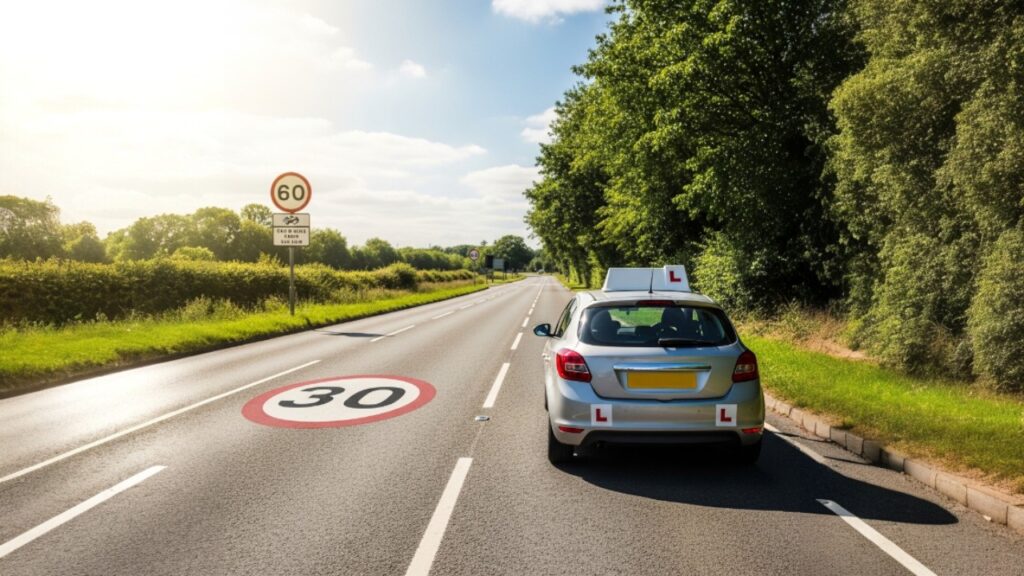
Speed limits are not arbitrary numbers—they are carefully calculated legal maximums designed to keep everyone safe on the road. For new drivers in the UK, understanding and respecting speed limits is absolutely critical. Not only is speeding one of the most common reasons for failing the driving test, but it also carries severe penalties that can be especially harsh for newly qualified drivers. With 2026 bringing significant changes to speed limit policies and enforcement across the UK, staying informed has never been more important . This comprehensive guide breaks down everything new drivers need to know about UK speed limits for new drivers, from the national speed limits to the expanding network of 20mph zones, and how recent and upcoming law changes affect your driving. Whether you’re learning with a driving school in Ilford or have found the cheapest driving instructor near me, mastering speed limits is essential for both passing your test and staying safe for life.
Part 1: The National Speed Limit System
The UK operates on a straightforward system of national speed limits, which apply unless signs indicate otherwise.
Built-Up Areas (30 mph)
In areas with street lighting, the default speed limit is 30 mph. This applies to most residential streets and town centres unless signs show a different limit.
Single Carriageways (60 mph)
On single carriageway roads—where traffic flows in both directions with no central reservation—the national speed limit is 60 mph for cars.
Dual Carriageways (70 mph)
On dual carriageways, where there is a central barrier separating opposing traffic, the limit is 70 mph for cars.
Motorways (70 mph)
Motorways also have a 70 mph limit for cars, though variable speed limits may apply in smart motorway sections.
Important: These are maximum limits, not targets. You must always drive at a speed appropriate for the conditions—slower in rain, fog, or heavy traffic .
Part 2: The Expanding 20mph Revolution
One of the most significant changes to UK speed limits in recent years has been the widespread introduction of 20mph zones.
What’s Happening Across the UK
- Wales: In September 2023, Wales became the first UK nation to introduce a default 20mph limit on restricted roads. Recent data suggests this has resulted in 882 fewer injuries and 14 prevented deaths .
- London: Transport for London (TfL) reports that 165 miles of its roads are now subject to 20mph limits .
- Scotland: Many residential areas in Scottish cities now feature 20mph zones.
- England: Local authorities including Surrey County Council are adopting more flexible approaches, with 20mph limits increasingly common near schools and in residential areas .
20mph Limits vs. 20mph Zones
- 20mph Limit: Applies to a single road or area and is marked with circular signs.
- 20mph Zone: Covers a larger area, may only have one sign at the entrance, and often features traffic calming measures like speed bumps .
Why 20mph?
Research shows that at 20mph, drivers have significantly more time to react. The average stopping distance is dramatically shorter, and a pedestrian hit at 20mph has a 2.5% chance of being fatally injured, compared to 20% at 30mph . Road safety charity Brake states that “a vehicle travelling at 20mph would stop in time to avoid a child running out three car-lengths in front. The same vehicle travelling at 25mph would not be able to stop in time” .
Part 3: Speed Limits and the New Driver Penalty System
For new drivers, the consequences of speeding are particularly severe.
The New Driver Probation Period
Under the Road Traffic (New Drivers) Act 1995, drivers are on probation for two years after passing their first test. During this period:
- You can only accumulate 6 penalty points (other drivers can accumulate up to 12 before disqualification) .
- If you reach 6 points within two years, your licence is automatically revoked.
- You must reapply for a provisional licence and retake both the theory and practical tests .
Speeding Penalties
For speeding offences, the standard penalty is:
- £100 fine
- 3 penalty points on your licence
For more serious speeding offences (excessive speed), penalties can include:
- Higher fines (up to 150% of your weekly income)
- Disqualification from driving
- Court prosecution
The Welsh Approach: Operation Ugain
In Wales, drivers caught speeding in 20mph zones may be offered a choice between:
- A free 10-minute roadside engagement session delivered by fire and rescue services, OR
- Accepting points and a fine
Drivers caught at significantly excessive speeds are not eligible for this option and face immediate prosecution .
Part 4: Intelligent Speed Assistance (ISA) – The New Technology
From July 2024, all new cars registered in the UK must be fitted with Intelligent Speed Assistance (ISA) .
What is ISA?
ISA uses a forward-facing camera and GPS data to identify the current speed limit. It then provides feedback to the driver to prevent them from exceeding the limit through:
- Audible or visual warnings (beeps or dashboard alerts)
- Haptic feedback (the accelerator pedal may vibrate or push back gently)
- Automatic speed reduction (limiting engine power to prevent acceleration past the limit)
Important: You Can Override It
A firm push on the accelerator will bypass the ISA limiter—essential for situations like overtaking safely. However, the system will reactivate on your next journey .
Insurance Impact
Insurers view ISA technology favourably. According to the European Transport Safety Council, widespread adoption could reduce collisions by 30% and deaths by 20% . This may eventually lead to lower premiums for drivers of ISA-equipped vehicles.
Part 5: Upcoming Changes for 2026 and Beyond
Several significant changes are on the horizon that will affect how new drivers interact with speed limits.
Graduated Driver Licensing (GDL) Proposals
While the UK Government has previously ruled out introducing GDL nationwide, Northern Ireland will become the first part of the UK to implement a GDL scheme from October 1, 2026 .
Under these new rules:
- New drivers under 24 will face a six‑month night‑time restriction (11pm to 6am) with passenger limits.
- A structured learning programme of 14 modules must be completed over at least six months.
- ‘R’ plates must be displayed for two years instead of one .
The UK Government is instead consulting on introducing a 3 to 6 month minimum learning period to ensure learners gain experience in varied conditions .
Theory Test Updates
From 2026, theory tests will include new questions on CPR and the use of Automated External Defibrillators (AEDs) .
Drink Drive Limit Consultations
The Government is consulting on reducing the legal alcohol limit in England and Wales to 50mg per 100ml of blood (matching Scotland) .
Stricter Penalties for Not Wearing Seatbelts
Drivers could soon receive penalty points for failing to wear a seatbelt, in addition to existing fines .
Part 6: Practical Tips for New Drivers
1. Know the Signs
- Circular red ring with a number: Maximum speed limit.
- Circular blue sign with a white number: Minimum speed (rare).
- White circle with black diagonal stripe: National speed limit applies.
2. Check Your Speedometer Regularly
New drivers often get “speed blindness”—the sensation of travelling slower than you actually are. Make a habit of glancing at your speedometer every 10-15 seconds.
3. Adjust for Conditions
Speed limits are maximums for ideal conditions. In rain, fog, ice, or heavy traffic, you must drive slower. The rule is: always be able to stop within the distance you can see to be clear.
4. Watch for Variable Limits
Smart motorways and some urban roads have variable speed limits displayed on overhead gantries. You must obey these.
5. Be Aware of 20mph Zones
With 20mph limits expanding across the UK, always check for signs when entering residential areas. In Wales, the default urban limit is now 20mph .
6. Don’t Rely on Other Drivers
Tailgating at any speed is dangerous. If someone behind wants to go faster, pull over when safe and let them pass. Never speed up to appease an impatient driver .
Part 7: How Professional Driving Instruction Prepares You
Understanding speed limits is not just about memorising numbers—it’s about developing judgement. A quality driving school like Driving Academy Ltd teaches you to:
- Read the road ahead and anticipate speed limit changes.
- Assess safe speeds based on weather, traffic, and road conditions.
- Manage your speed smoothly without constant speedometer checking.
- Understand the “why” behind limits, making you a safer driver for life.
This is why choosing a professional driving school in Ilford over simply the cheapest driving instructor near me matters. Our instructors stay updated on all the latest UK driving law changes and incorporate them into lessons, ensuring you’re not just test-ready, but road-ready.
Conclusion: Respect the Limit, Protect Your Licence
For new drivers in the UK, understanding and respecting speed limits is non-negotiable. The rules are there to protect you and everyone else on the road. With the two-year probation period meaning just 6 points can end your driving journey before it’s truly begun, every journey is a test of your commitment to safe driving. Stay informed about the expanding 20mph network, be aware of new technologies like ISA, and always drive at a speed appropriate for the conditions.
Ready to learn safe, legal driving from day one?
📞 Call Driving Academy Ltd at 07399 696344 – Our expert instructors in Ilford and London will ensure you understand not just the speed limits, but the judgement to drive safely within them.
📧 Email: drivingacademyltd@gmail.com
📍 Visit Us: 101 Whitechapel High Street, London, E1 7RA
Your safe driving journey starts here. Book your lesson today.