

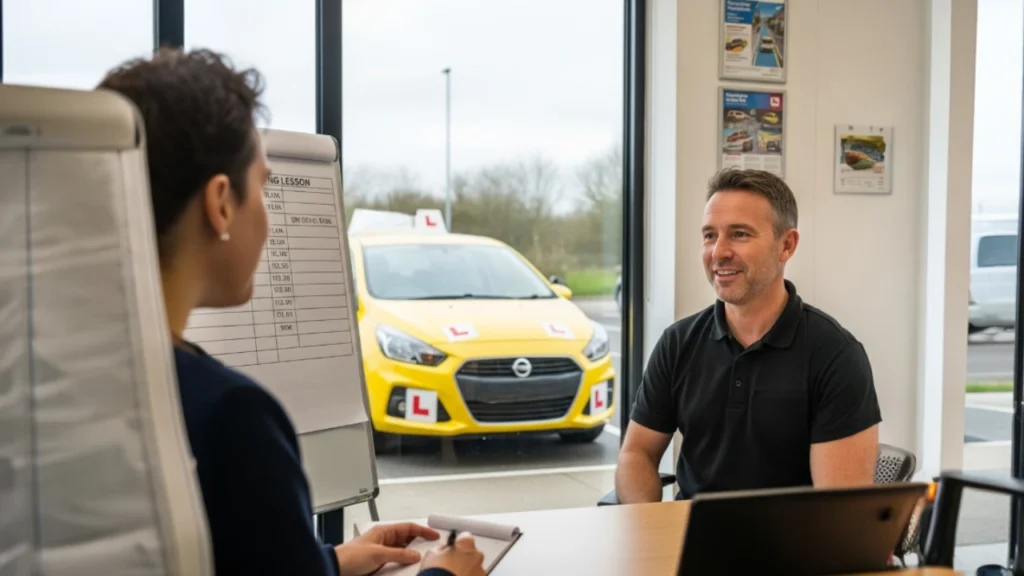
Learning to drive is a journey, and your instructor is your most important guide. Yet, for many learners, the person in the passenger seat can seem like a mystery. What are they really looking for? What are the most common mistakes they see? To pull back the curtain, we sat down with Michael, one of our senior DVSA-approved instructors at Driving Academy Ltd in Ilford, for an exclusive driving instructor interview. Whether you’re searching for the cheapest driving instructor near me or want to understand the mindset of a professional, this candid conversation reveals what it takes to succeed from the expert’s perspective.
Q1: Michael, what’s the most rewarding part of being a driving instructor?
Michael: “Without a doubt, it’s that moment a student passes. You see their confidence transform. But beyond the test, it’s knowing I’ve equipped someone with a lifelong skill for independence and safety. Teaching someone how to get their provisional licence in the UK is the first step, but watching them grow from a nervous beginner into a safe, conscientious driver is the real victory.”
Q2: What’s the single biggest mistake you see learners make?
Michael: “Observation, without question. Not just checking mirrors, but proper, effective observation at junctions. Learners often do a ‘tick-box’ glance without actually seeing or processing what’s there. It’s the leading cause of test failures. I always say, ‘Your head must turn with your eyes.’ Examiners need to see that life-saving check.”
Q3: How important is it for learners to practice outside of lessons?
Michael: “It’s a game-changer. A student having 2-3 hours of quality private practice between lessons will progress about 50% faster. It consolidates what we cover. But the keyword is quality. They must practice the right techniques we’ve worked on, not develop bad habits with a well-meaning relative who may be teaching outdated methods.”
Q4: Many people search for the ‘cheapest driving instructor near me.’ What’s your perspective on that?
Michael: (Laughs) “It’s the oldest question. Look, everyone has a budget. But learning to drive is an investment in a dangerous, complex skill. The cheapest rate can sometimes mean an inexperienced instructor, no structured learning plan, or an instructor who just isn’t invested. You might end up taking more lessons to correct mistakes, which costs more in the long run. A reputable driving school invests in continuous instructor training and a proper curriculum. Value over price, always.”
Q5: What’s your top tip for overcoming test day nerves?
Michael: “Two things. First, be so prepared that your routine is automatic. Nerves thrive on uncertainty. If you’ve done mock tests and know the test routes, that uncertainty shrinks. Second, remember the examiner is not looking for a perfect, robotic drive. They want to see safe, legal driving. If you make a minor mistake, don’t dwell on it. Just focus on driving safely for the rest of the test. Breathe. Talk to yourself if it helps—’Okay, next is a roundabout, mirrors, signal, position.'”
Q6: Can you share a funny or memorable teaching moment?
Michael: “I had a lovely student who was incredibly nervous. During a lesson in a quiet industrial estate, we were practicing stopping and starting. A cat sat down in the middle of the road about 50 yards ahead. My student panicked, stopped the car, and with total seriousness asked, ‘Do I need to give way to the cat?’ We had a good laugh, and it broke the tension. She passed first time a few weeks later!”
Q7: What’s one thing you wish every learner knew before their first lesson?
Michael: “That it’s okay to be slow. Your first lesson isn’t about driving around London. It’s about getting a feel for the controls in a safe space. Also, wear comfortable shoes! You’d be amazed how many people turn up in thick boots or heels, which makes clutch control much harder.”
Q8: How do you tailor lessons to different students?
Michael: “Everyone learns differently. Some need constant reassurance, some need clear, direct instruction. My first job is to figure out their learning style. A teenager, a professional returning to driving, and someone learning how to exchange a foreign licence all have different pressures and prior knowledge. The lesson plan must adapt to them, not the other way around.”
Q9: What does a great driving school offer that a lone instructor might not?
Michael: “Structure, support, and accountability. At Driving Academy Ltd, we have a mapped-out syllabus. If an instructor is ill, another can step in seamlessly because we follow the same standards. We have regular training meetings to share best practices. For the student, it means consistency, a clear progression path, and the knowledge that there’s an entire team ensuring their success, not just one person.”
Q10: Finally, what’s the key trait of a driver who will be safe for life?
Michael: “Humility. The driver who knows they don’t know everything. The one who continues to learn, who doesn’t get aggressive, who understands that the road is a shared space. Passing your test is a licence to learn. The safest drivers are those who stay cautious, courteous, and conscious of their responsibility to everyone else on the road.”
Conclusion: More Than Just Lessons
This driving instructor interview reveals that professional instruction is about far more than just passing a test. It’s about mentorship, building confidence, and instilling a safety-first mindset that lasts a lifetime. Choosing the right instructor and school is the most important decision a learner can make.
Ready to learn with an instructor who cares about your long-term success?
📞 Call Driving Academy Ltd at 07399 696344 – Speak to our team and book your first lesson with instructors like Michael in Ilford and across London.
📧 Email: drivingacademyltd@gmail.com
📍 Visit Us: 101 Whitechapel High Street, London, E1 7RA
Your journey to becoming a great driver starts with the right guide.