


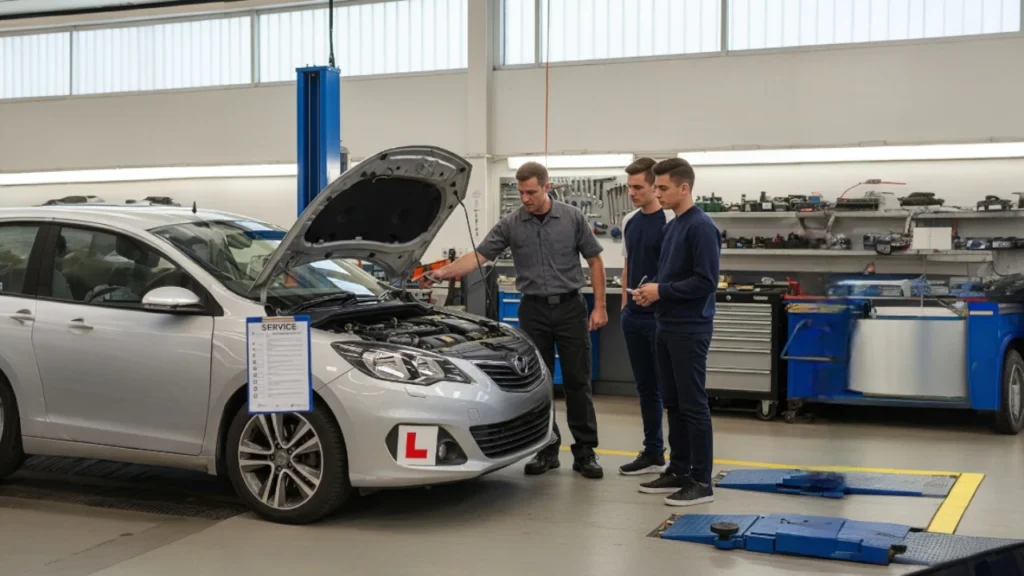
For many new drivers, the excitement of owning a first car can be quickly overshadowed by the looming responsibility of maintenance. It’s easy to view regular car servicing as an optional expense or a mere formality for the MOT. However, this perspective is both risky and costly. A service is a proactive health check for your vehicle, designed to identify and fix small issues before they become major, dangerous failures. Whether you learned with the cheapest driving instructor near me or a premium driving school in Ilford, understanding the critical importance of servicing is a fundamental part of your ongoing journey as a safe and responsible driver. It’s as crucial as knowing the complete guide to UK seatbelt & car safety rules—both are non-negotiable pillars of road safety.
Part 1: The Three Pillars of Why Servicing is Essential
1.1 Safety: Your Primary Responsibility
Above all else, a well-serviced car is a safe car. A service critically examines the systems that keep you in control and protected.
- Brakes: Worn pads or degraded fluid dramatically increase stopping distances.
- Tyres: Checks for correct pressure, tread depth above the legal 1.6mm minimum, and sidewall damage prevent blowouts and loss of grip.
- Steering & Suspension: Faults here can make the car unpredictable and hard to control, especially in emergencies.
- Lights & Signals: Ensures you can see and be seen, and clearly communicate your intentions to other road users.
Neglecting these checks isn’t just a financial gamble; it’s a gamble with your safety and the safety of others on the road.
1.2 Reliability: Avoiding the Inconvenience and Danger of Breakdowns
A breakdown is more than just an inconvenience—it can strand you in unsafe locations, cause significant stress, and lead to costly emergency repairs. Regular car servicing:
- Prevents Wear and Tear: Replaces consumable parts like filters, spark plugs, and belts before they fail.
- Identifies Hidden Issues: A trained mechanic can spot early signs of problems (like a small fluid leak or a worn component) that you might miss.
- Ensures Peace of Mind: Knowing your car has been professionally inspected allows you to drive with confidence, especially on longer journeys or motorways.
1.3 Long-Term Cost Savings: The “Pay a Little Now, Save a Lot Later” Rule
This is the most compelling financial argument for diligent owners. Skipping a £200-£300 service to “save money” can easily lead to:
- Catastrophic Engine Failure from low oil or a failed water pump: Repair cost £2,000+.
- Complete Brake System Overhaul after neglecting pads: Cost £400+ vs. £150 for pads alone.
- Failed MOT due to multiple neglected faults, requiring urgent, more expensive repairs to get your car legal again.
Servicing is the most cost-effective form of car insurance you can buy for the mechanical health of your vehicle.
Part 2: What Actually Happens During a Service?
Understanding the process demystifies it. A full service typically includes:
- Engine Oil & Filter Change: The lifeblood of your engine.
- Fluid Level Checks & Top-ups: Coolant, brake fluid, power steering fluid, screenwash.
- Brake Inspection: Pad thickness, disc condition, and fluid quality.
- Tyre Inspection: Pressure, tread depth, and general condition.
- Suspension & Steering Check: For wear and leaks.
- Exhaust System Check: For leaks and security.
- Light & Electrical Check: All bulbs, signals, and wipers.
- Air Filter & Cabin Filter Replacement: For engine performance and air quality.
Part 3: Service Intervals—What Do They Mean?
- Time vs. Mileage: Services are recommended annually or every 10,000-12,000 miles, whichever comes first. Short, frequent trips can be harder on an engine than long motorway miles.
- Interim vs. Full Service: An interim service is a basic check and oil change, often done at the 6-month point for high-mileage drivers. A full service is more comprehensive. Follow your vehicle handbook’s schedule.
Part 4: Servicing as Part of the Safe Driver Mindset
A professional driving school aims to create safe drivers for life. This mindset extends beyond the steering wheel. Just as we teach you to perform cockpit checks (fuel, lights, mirrors) before driving, regular car servicing is the macro version of that safety-first principle. It’s about taking proactive responsibility for your vehicle’s roadworthiness. Pairing this mechanical knowledge with a thorough understanding of the complete guide to UK seatbelt & car safety rules creates a comprehensively safe driver—one who understands that their responsibility encompasses both their own driving behaviour and the mechanical fitness of their vehicle.
Conclusion: An Ounce of Prevention
In the world of motoring, the old adage “an ounce of prevention is worth a pound of cure” has never been more true. Regular car servicing is that vital ounce of prevention. It safeguards you, your passengers, and other road users. It protects your investment in your car and saves you significant money over time. It is the hallmark of a mature, responsible driver.
Ready to become a truly knowledgeable and safe driver? Start with expert instruction.
📞 Call Driving Academy Ltd at 07399 696344 – We teach the skills and the mindset for a lifetime of safe driving in Ilford and across London.
📧 Email: drivingacademyltd@gmail.com
📍 Visit Us: 101 Whitechapel High Street, London, E1 7RA
Invest in your skills, then invest in your car’s health. Drive safe, drive smart.