


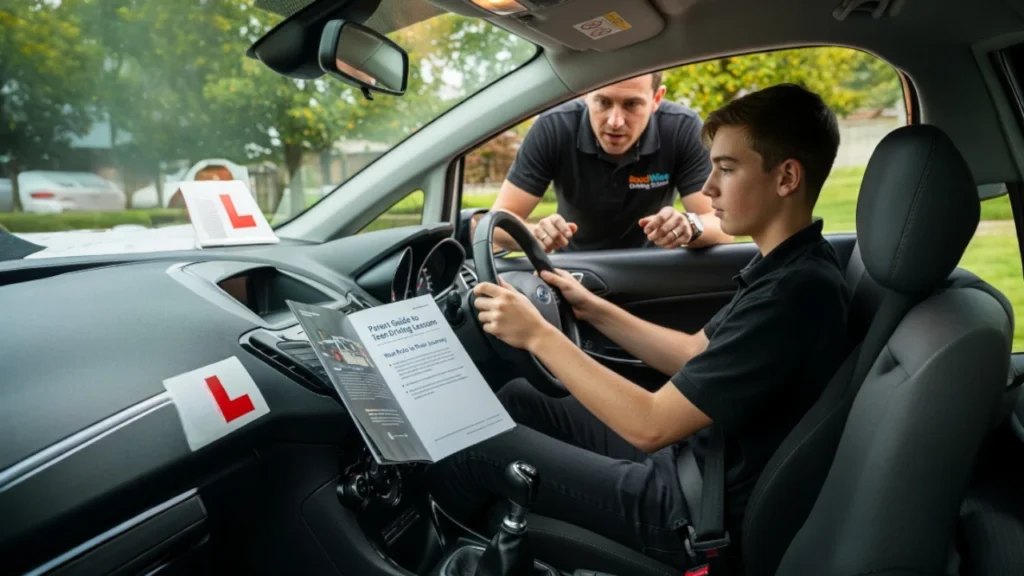
Watching your teenager learn to drive is a milestone filled with pride, worry, and many questions. As a parent in the UK, navigating teen driving lessons involves more than just booking lessons—it’s about providing the right support, understanding the legal framework, and promoting lifelong safety habits. This comprehensive guide is designed specifically for UK parents, covering everything from costs and choosing the right driving school in Ilford to reinforcing crucial UK seatbelt and car safety rules and helping your teen develop strategies to pass their driving test quickly in the UK. We’ll connect your vital role to every step of the learning journey.
For a driving school that partners with parents for success, contact Driving Academy Ltd at 📞 07399 696344, email 📧 drivingacademyltd@gmail.com, or visit 📍 101 Whitechapel High Street, London, E1 7RA.
Part 1: Understanding the Journey – The Parent’s Roadmap
The Legal and Procedural Framework
Your teen can apply for their provisional licence at 15 years and 9 months but cannot start driving a car until they are 17. The process involves several key stages where your support is crucial:
- Provisional Licence Application: Assist with the GOV.UK online application (requires identity documents and a £34 fee).
- UK Driving Theory Test: Encourage and help with revision. They must pass this before booking their practical test.
- Professional Lessons: The core learning phase with a qualified instructor.
- Private Practice: Your opportunity to support their learning (if you meet the legal requirements).
- Practical Driving Test: The final hurdle.
Understanding this timeline helps you provide timely support and manage expectations.
Part 2: Choosing the Right Instruction – A Critical Decision
Your choice of instructor or school sets the tone for your teen’s entire driving career. Here’s what to look for in a driving school in Ilford or your local area:
| Selection Criteria | Why It Matters for Your Teen | Questions to Ask |
|---|---|---|
| DVSA-Approved Instructor (ADI) | Guarantees professional, regulated training. | “Are all your instructors fully qualified ADIs?” |
| Structured Learning Plan | Ensures systematic progress, not random drives. | “Do you follow a defined syllabus? Can we see it?” |
| Modern Dual-Control Car | Safety during lessons and familiarity with modern features. | “What car will they learn in? Is it manual or automatic?” |
| Clear Communication Policy | Keeps you informed of progress without breaching your teen’s independence. | “How do you provide feedback to parents/guardians?” |
| Local Test Route Knowledge | Instructors familiar with Ilford routes (like Goodmayes test centre) provide a significant advantage. | “Are you familiar with the local test routes and common pitfalls?” |
Why a Local School Matters: A driving academy ltd based in Ilford doesn’t just teach generic driving; they prepare students for the specific challenges of local roads, from complex roundabouts like Gants Hill to busy high streets, directly impacting test success.
Part 3: Your Role Beyond the Chequebook – Practical Support
Financial Planning: The Real Costs of Learning
Be prepared for the full investment. Beyond the lesson fee (£28-£38/hour in London), budget for:
- Provisional Licence: £34
- Theory Test: £23
- Practical Test: £62 (weekday)
- Potential extra lessons or retests
- Consider block bookings: They often offer a discount and guarantee lesson continuity.
Supporting Theory Test Success
The UK Driving Theory Test is the gateway to the practical. You can help by:
- Providing Resources: Buy the official DVSA theory test kit app or book.
- Creating a Study Schedule: Help them build consistent, small revision sessions into their week.
- Practicing Together: Use online hazard perception clips and quiz each other on road signs and rules.
Facilitating Private Practice (If You Choose To)
If you decide to provide private practice, you must:
- Be over 21.
- Have held a full driving licence for at least 3 years.
- Ensure the car is insured for your teen as a learner, has a valid MOT (if needed), and displays L plates.
- Focus on reinforcing professional lessons, not teaching new skills. Use the time for gentle practice of manoeuvres or driving in familiar, low-pressure environments.
Part 4: Instilling Safety as a Core Value
Your influence is key to embedding UK seatbelt and car safety rules as non-negotiable habits.
- Lead by Example: Always wear your seatbelt, never use your phone, and follow speed limits diligently.
- Discuss the ‘Why’: Explain that seatbelts and rules aren’t arbitrary—they are based on saving lives. Relate it to their own safety and that of their friends.
- Vehicle Safety Checks: Teach them basic maintenance—checking tyre tread, oil, and coolant levels—so they see the car as a responsibility, not just a tool.
Part 5: Helping Them Pass Their Test Quickly (and Safely)
The goal is not just a pass, but a safe pass. Efficiency comes from quality preparation.
- Consistency is Key: Encourage regular lessons (e.g., 2 per week) to maintain momentum and skill progression.
- Mock Test Familiarity: A good instructor will conduct mock tests. Discuss these performances with your teen calmly, focusing on learning from faults.
- Manage Test Day Nerves: Ensure they get a good night’s sleep, have a healthy breakfast, and arrive early. Your calm confidence will help soothe their anxiety.
- Post-Test Planning: Discuss what happens after they pass—the importance of possibly using P plates, continuing to drive regularly, and considering a Pass Plus course to build confidence in motorway and night driving.
FAQs for UK Parents
Q1: How many lessons will my teenager need?
A: The DVSA average is around 45 hours of professional lessons plus 20+ hours of private practice. However, every learner is different. A good instructor will give regular progress updates.
Q2: Should they learn manual or automatic?
A: Discuss the pros and cons together. A manual licence offers more flexibility (can drive both), but automatic is often easier to learn and aligns with the electric car future. Let their confidence and coordination guide the choice.
Q3: What if there’s a personality clash with the instructor?
A: A positive relationship is essential. A reputable driving school should allow a change of instructor if the fit isn’t right. Encourage your teen to speak up.
Q4: How can I track progress without being overbearing?
A: Agree on a communication method with the instructor from the start—perhaps a brief update after every 10 hours. Focus on asking your teen open questions like, “What did you find most challenging today?” rather than “Did you pass your manoeuvre?”
Q5: Is an intensive ‘crash course’ a good idea for teens?
A: It can be for highly focused, resilient teens, but the intensity can be overwhelming. A semi-intensive course over a few weeks is often a better middle ground, allowing time for skills to settle.
Q6: What’s the most important thing I can do as a parent?
A: Foster a respectful attitude towards driving. Frame it as a skill that requires lifelong learning and immense responsibility, not just a ticket to freedom. Your attitude will profoundly shape theirs.
Conclusion: Partnering for a Safe Journey
Guiding your teen through driving lessons is one of the most impactful things you will do. By choosing the right educational partner, providing structured support, modelling and insisting on strict safety standards, and managing the process with patience, you don’t just help them pass a test.
You help them become a safe, confident, and responsible driver for life. At Driving Academy Ltd, we understand the vital role parents play and are committed to working with you to ensure your teen’s success on every mile of their journey.
Ready to start this journey with a school that values your partnership? Contact us today.
📞 07399 696344 | 📧 drivingacademyltd@gmail.com | 📍 101 Whitechapel High Street, London, E1 7RA